Best Learning Toys for 3-Year-Olds: Stimulating Early Skills and Fun
Choosing the right educational toys for a 3-year-old blends play with learning. The selections below showcase interactive, language-rich, and hands-on toys that support vocabulary growth, fine motor development, and early literacy. Each product highlights practical benefits for preschoolers and aligns with common early childhood goals, such as turn-taking, attention, and imaginative play. Explore options that combine engaging design with educational value to help young children build confidence while exploring new concepts.
| Product | Brand | Type | Key Benefit |
|---|---|---|---|
| Airbition Talking Flash Cards | Airbition | Educational Device | Vocabulary expansion with 224 words |
| LeapFrog Prep for Preschool Activity Book | LeapFrog | Activity Book | School readiness activities on six touch pages |
| LeapFrog 2-in-1 LeapTop Touch | LeapFrog | Laptop/Tablet Hybrid | Letter and number practice with role-play features |
| LeapFrog Mr Pencil’s Scribble Write and Read | LeapFrog | Creative Writing Toy | Writing letters and words through guided tracing |
| Zeoddler Alphabet Puzzles | Zeoddler | Wooden Puzzles | ABC recognition and fine motor skill development |
Airbition Talking Flash Cards for Toddlers

Airbition’s talking flash cards provide 224 colorful illustrations paired with sounds, covering animals, vehicles, foods, fruits, vegetables, and more. The Montessori-style setup encourages independent exploration and vocabulary growth, while supporting early cognitive skills. The device is designed for easy use: switch on, insert a card, and listen to content in a standard American accent. It includes real animal sounds and a repeat function, with a five-level volume control for age-appropriate listening experiences. This can be particularly helpful for speech therapy and autism-friendly play.
Dinosaur Toys Magnetic Color and Number Maze

This wooden magnetic maze toy combines color and number matching with a bead-sliding mechanic. Suitable for ages 2–5, it helps develop fine motor skills, hand-eye coordination, and early math concepts through interactive play. The board uses non-toxic water-based paint and smooth edges for safe handling. The magnetic wand is fixed to the board for easy storage, making it a tidy, durable option for busy preschoolers.
LeapFrog Prep for Preschool Activity Book

Interactive pages guide preschoolers through counting, colors, shapes, the alphabet, and early word recognition. Six touch-sensitive pages offer replayable learning activities, while six marker pages and an erasable pen support writing practice, number matching, and shape tracing. A dedicated “Dress for the Weather” page helps kids imagine practical scenarios and apply what they learn to daily routines. This resource focuses on building confidence and school readiness through structured, engaging activities.
LeapFrog 2-in-1 LeapTop Touch

This 2-in-1 laptop-style toy transitions from a keyboard-and-screen laptop to a touch tablet, offering an engaging blend of pretend play and educational content. The keyboard includes letters A–Z and numbers 1–10, while the tablet mode focuses on interactive activities. Children can practice spelling their own name and engage in pretend communications, fostering early literacy, numeracy, and imaginative play in a familiar family context.
LeapFrog Mr Pencil’s Scribble Write and Read

Mr Pencil guides children through uppercase and lowercase letter formation with step-by-step tracing. After tracing, the letters transform into animated animals and objects, reinforcing letter recognition and phonics. The toy also includes a feature to personalize writing by entering the child’s first, middle, and last name. This combination of handwriting practice and interactive feedback supports early literacy skills and fine motor development in an approachable format.
LeapFrog Learning Friends 100 Words Book
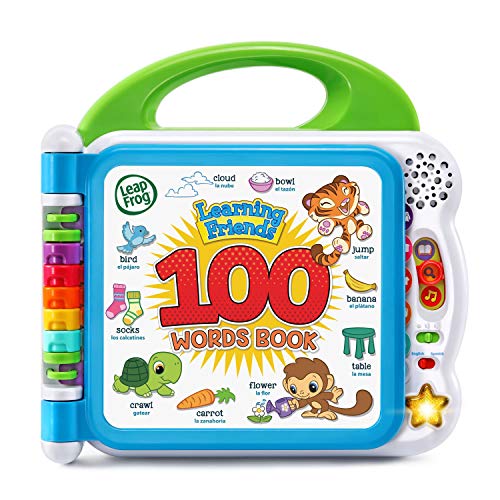
This interactive word book introduces over 100 age-appropriate words across categories like pets, foods, colors, and activities, guided by learning friends Turtle, Tiger, and Monkey. Touching words on the pages triggers sound effects and informative content, while a light-up star button plays the Learning Friends theme song. The experience blends sensory engagement with vocabulary acquisition, ideal for developing listening skills and word recognition in young children.
Zeoddler Alphabet Puzzles

Zeoddler Alphabet Puzzles feature 26 uppercase letters crafted from natural wood. These Montessori-inspired puzzles support letter recognition and early literacy through hands-on play. With a child-friendly size and thickness, the pieces are easy to grasp, promoting fine motor skills and hand-eye coordination. The durable design suits repeated play, encouraging kids to explore letters, sounds, and word-building concepts.
Magnetic Wooden Fishing Game
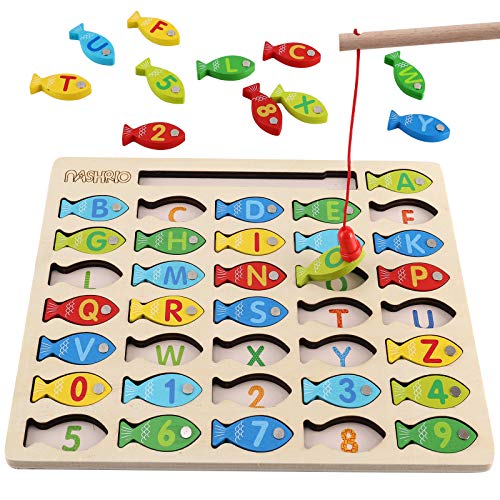
This fishing game combines letters and numbers with a wooden board and colorful fish pieces. Children use a magnetic pole to catch fish and identify letters and numbers, reinforcing early math and literacy concepts. Crafted from wood with non-toxic finishes, the toy emphasizes safety and durability for extended use. The game supports color recognition, letter identification, and counting in an engaging, screen-free format.
Buying Guide: Key Purchase Considerations
- Learning goals: Match toys to goals like vocabulary growth, early literacy, handwriting practice, or fine motor skills development.
- Age appropriateness: Ensure activities fit a 3-year-old’s cognitive level and attention span.
- Durability and safety: Look for sturdy materials, smooth edges, and non-toxic finishes for everyday play.
- Screen-free options: For balanced development, combine traditional puzzles and hands-on games with digital aids.
- Language support: Devices with clear pronunciation and language variety can aid bilingual households or speech therapy needs.
- Storage and usability: Easy storage and simple operation encourage independent exploration and reduce setup friction.
- Maintenance: Reusability of components and ease of cleaning contribute to long-term value.
- Inclusivity: Consider tools that support a range of learners, including those pursuing speech and language development.
- Variability: A mix of activities—puzzles, storytelling, writing, and motor skills—offers a well-rounded learning experience.
- Budget considerations: Prioritize toys with durable construction and multiple learning modes to maximize return on investment.