Best Manipulative Toys for Toddlers: Build Fine Motor Skills Through Play
Manipulative toys help toddlers develop fine motor skills, hand-eye coordination, and early problem-solving abilities. The following selections emphasize sorting, matching, counting, and tactile exploration—perfect for curious 18-month-olds to preschoolers. Below, you’ll find five highly effective options that support development while keeping play engaging and fun for kids and parents alike.
| Product | Brand | Key Skill Focus |
|---|---|---|
| Learning Resources Spike The Fine Motor Hedgehog | Learning Resources | Fine motor, color recognition, counting, patterning |
| Infantino Press & Stay Sensory Blocks | Infantino | Tactile exploration, shapes, color contrast |
| Learning Resources Snap-n-Learn Matching Dinos | Learning Resources | Sorting, matching, counting, color and shape recognition |
| Learning Resources Farmer’s Market Color Sorting Set | Learning Resources | Color sorting, categorization, vocabulary expansion |
| PicassoTiles Hedgehog Interlocking Tiles | PicassoTiles | Spatial reasoning, color recognition, early STEM |
The following sections highlight each product’s strengths, with practical notes on how they support developmental milestones in toddlers. Each entry stays concise and focuses on observable benefits to help caregivers make informed choices.
Learning Resources Spike The Fine Motor Hedgehog
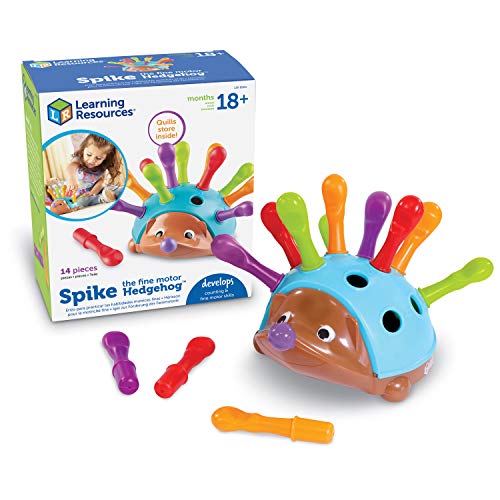
The Spike The Fine Motor Hedgehog provides a tactile, engaging way to build essential hand muscles and coordination. Toddlers manipulate colorful quills to remove and reinsert them into the hedgehog’s back, promoting pinching, gripping, and spatial awareness. The design evolves with your child, starting from simple placement for younger toddlers to introducing color identification, counting, and pattern recognition for preschoolers. The textured quills offer sensory stimulation that helps maintain focus during play and can be used for extended, independent exploration or guided activities.
Infantino Press & Stay Sensory Blocks

These 24 interlocking blocks are designed for easy cleaning and handling, ideal for babies and toddlers ages 12 months and up. The blocks combine high-contrast colors with varied textures to captivate little learners. Easy assembly and disassembly support early fine motor skills as children press, connect, and pull apart pieces. This toy doubles as a sensory experience, helping children focus on tactile cues and control as they manipulate the blocks. It’s well-suited for independent play, preschool centers, and travel activities alike.
Learning Resources Snap-n-Learn Matching Dinos

Snap-n-Learn Matching Dinos presents nine two-piece dinosaurs with vibrant colors and friendly shapes. Toddlers practice sorting by color, species, or the shapes printed on the dinos’ backs, fostering early categorization and memory skills. With multiple matching pathways, children can experiment with endless combinations, supporting flexible thinking and fine motor control as they snap figures together and apart. This set is ideal for small-group activities, classroom centers, or family playtime focused on hands-on learning.
Learning Resources Farmer’s Market Color Sorting Set
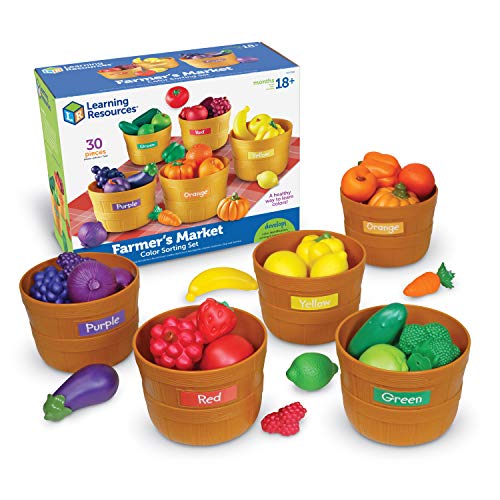
This play food collection invites toddlers to explore colors and pretend-play scenarios while sorting items into corresponding color baskets. The included bushels of play food help build color recognition and categorization skills, as well as vocabulary related to common foods. By coloring and grouping items, children strengthen fine motor precision through crafting and arranging tiny pieces. The familiar shopping and kitchen play framework makes learning approachable and fun for everyday pretend activities, whether at home or in a daycare setting.
PicassoTiles Hedgehog Interlocking Tiles

PicassoTiles Hedgehog interlocking tiles offer a tactile, visually engaging way to develop hand-eye coordination and early STEM concepts. The hedgehog motif and the connectivity of the tiles encourage children to experiment with color matching, counting, and building structures. With the option to expand designs by adding more pieces, these tiles promote increasingly complex spatial reasoning and problem-solving skills as children grow. The modular system supports collaborative play and classroom-style activities while staying accessible to beginners.
Buying Guide
- Age range and developmental goals: Choose toys that match your child’s current abilities but offer room to grow. Look for items that introduce colors, shapes, counting, and simple problem-solving while remaining safe and inviting for toddlers.
- Motor skills emphasis: Prioritize tools that require pinching, squeezing, snapping, or manipulating small pieces, as these actions target fine motor development and hand strength.
- Material and safety: Favor sturdy, BPA-free plastics and rounded edges. Check for choking hazards with smaller components and supervise use for younger toddlers.
- Sensory engagement: Toys with varied textures, colors, and sounds can sustain attention and provide valuable sensory input, supporting focus and self-regulation.
- Open-ended play versus structured activities: Balance toys that offer guided activities (sorting, matching) with pieces that encourage imaginative, child-led exploration.
- Durability and cleanup: Consider pieces that are easy to clean and resistant to frequent dropping or rough handling, especially for travel or daycare use.
- Learning continuity: A cohesive set or overlapping themes (color sorting, counting, shapes) helps reinforce concepts across play sessions and transitions between activities.
- Group play value: Some options support collaborative play, which can build social skills and sharing, while others are ideal for solo quiet play during transitions.
- Budget and expansion: Look for modular systems or sets that permit expansion with additional pieces, enabling longer-term learning and varied challenges without replacing toys.
These selections offer a spectrum of manipulative activities—fine motor strength, sorting, counting, and early STEM exploration. They provide observable developmental benefits while keeping play engaging and accessible for toddlers and preschoolers. Caregivers can mix and match based on a child’s interests, ensuring a balanced, development-focused play routine.