Best Pink Pianos for Kids: Fun, Safe, Educational Musical Toys
Discover the best pink pianos for kids that blend playtime with early music education. Each option below is designed for young learners—sturdy for little hands, with kid-friendly features, and colorfully appealing in pink. The selections span portable 61-key options to compact 30- or 37-key models, offering learning modes, record/playback, and built-in rhythms to spark creativity while developing motor skills and musical understanding. Use this guide to compare key features and choose a safe, engaging toy that grows with a child’s budding musical curiosity.
| Product | Brand | Keys | Notable Features | Ideal For |
|---|---|---|---|---|
| WOSTOO Kids Keyboard Piano | WOSTOO | 61 | Detachable microphone, multiple tones, 100 rhythms, 50 demo songs, built-in battery | Aspiring young musicians seeking portability and interactive play |
| Best Choice Products Kids Classic Mini Grand Piano | Best Choice Products | 30 | Key stickers, lid, bench, and stand option; enamel pink finish | Beginner learners who want a traditional grand-piano look |
| TWFRIC Kids 37 Keys Pink Piano | TWFRIC | 37 | Record & playback, 8 rhythms, 8 tones, USB/recording options | Young beginners exploring musical experimentation and creativity |
| Eastar EK-620 61 Key Keyboard Kit | Eastar | 61 | 350 tones, 350 rhythms, 50 demo songs, metronome and MP3 features | Kids who want a wide sound library and classroom-like practice |
| Melissa & Doug Learn-to-Play Pink Piano | Melissa & Doug | 25 | Color-coded keys, illustrated songbook, two octaves; wooden construction | Young children starting music with tactile, durable design |
WOSTOO Kids Keyboard Piano

The WOSTOO pink keyboard plays as a multifunctional learning hub for kids. It combines education with entertainment, offering many tones, rhythms, and melodies to encourage exploration. The design emphasizes safe, smooth edges and child-friendly materials, making it a practical first piano. It features a large 61-key keyboard with a built-in rechargeable battery, allowing hours of use away from outlets. A detachable microphone and dual speaker setup encourage group play and singing along while practicing scales and basic tunes.
Key features include: charging and playing modes, a recording playback function, 100 styles of rhythm, 100 tones, and 50 demo songs. The included music stand helps keep sheet music or lesson sheets at a comfortable viewing height, supporting independent practice. Overall, this model suits kids who want a portable, feature-rich instrument that doubles as a learning aid and a music toy.
Best Choice Products Kids Classic Mini Grand Piano
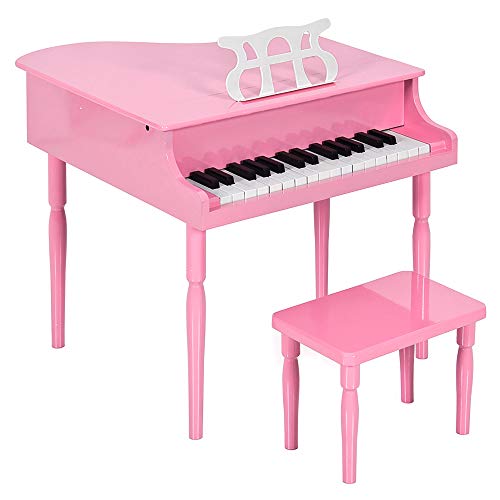
This mini grand piano from Best Choice Products brings a traditional look with a playful pink enamel finish. It features 30 keys and a wooden MDF build with a sturdy presence ideal for table-top practice or small play areas. The piano includes key stickers to promote proper finger placement as kids learn their scales. The lid can be opened to amplify acoustics, offering a tactile sense of a real grand piano while remaining perfectly sized for little hands. The setup is straightforward and supports early music education through kinesthetic engagement and visual cues.
TWFRIC Kids 37 Keys Pink Piano

The TWFRIC 37-key pink piano emphasizes a compact, kid-friendly size while delivering essential features for beginners. The keyboard includes a record-and-playback function, 8 rhythms, 8 tones, and 4 percussion sounds, making it suitable for early rehearsal and song creation. Its design highlights a child-focused approach with approachable key spacing and volume controls, encouraging kids to experiment with melodies and tempo. For families seeking a small, portable education toy, this model provides a balanced blend of playability and learning support.
Eastar EK-620 61 Key Keyboard Kit

The Eastar EK-620 offers a broad sound library with 350 tones and 350 rhythms, plus 50 demonstration songs. This model is designed to grow with a child’s abilities, providing advanced features such as a metronome, chord function, vibrato, and MP3 input for playback. Safe ABS plastic keys and a child-sized keybed help keep entry comfortable for young players. The kit typically includes a stand, bench, and microphone, delivering a classroom-like setup that supports structured practice and group activities while maintaining a kid-friendly aesthetic.
Melissa & Doug Learn-to-Play Pink Piano

The Melissa & Doug Learn-to-Play Pink Piano features two full octaves and 25 color-coded keys, paired with a comprehensive songbook. The wooden construction offers a sturdy, tactile playing experience that feels more substantial than many plastic toys. The color-coding helps children understand note placement and associates keys with simple melodies. This option is ideal for parents seeking a classic, durable piano that supports early music learning while providing an approachable, timeless design.
Buying Guide: Key Purchase Considerations
When choosing a pink piano for kids, consider how the instrument will be used, the child’s age, and learning goals. The following perspectives help balance play, practice, and long-term value:
- Age and size: For very young children, 25–37 keys are simpler and lighter, fostering confidence and quick wins. Older beginners can benefit from 61-key keyboards that expand range and repertoire.
- Learning features: Record/playback, demo songs, metronome, and chord options support basic music literacy, rhythm training, and memory. A USB or MP3 input can introduce playback of favorite melodies for practice.
- Portability and setup: Detachable microphones, stands, benches, and compact designs make it easier to set up learning spaces in small rooms or travel-friendly environments.
- Safety and durability: Look for rounded edges, non-toxic materials, and sturdy construction suitable for kids. Wooden cases offer a classic feel but may be heavier than plastic builds.
- Expansion potential: Some models scale from beginner to more complex play through additional tones, rhythms, and demonstrations. This helps avoid early obsolescence if a child’s interest grows.
- Noise considerations: Headphone compatibility or adjustable volumes protect hearing during practice. Suitable practice environments may influence the choice between louder speaker setups and quieter options.
- Educational alignment: Consider whether the toy emphasizes musical concepts such as melody, rhythm, and tempo, or focuses primarily on general play. A mix of both ensures ongoing engagement without frustration.
Overall, pink kid-friendly pianos blend appealing aesthetics with practical features to support early music development. The best choice depends on how a child learns: some children respond to color-coded keys and sturdy wooden builds, while others benefit from electronic features like recording, playback, and a broader sound library. For families prioritizing portability, a compact 37- or 30-key model with basic play and recording functions can be ideal. For long-term learning ambitions, 61-key keyboards with a range of tones and rhythms are preferable, as they closely resemble real pianos and enable progressive skill-building.