Best 5 Toy Phones for Toddlers: Fun, Safe Pretend Play for Little Hands
Parents often look for engaging, safe toys that spark imagination while teaching early skills. A kid-friendly pretend phone can encourage language, counting, memory, and social interaction. Below are five top picks that combine colorful designs, durable builds, and engaging features suitable for toddlers. Each option is designed to fit small hands, produce friendly sounds, and encourage interactive play as children explore how communication works in a playful setting.
| Product | Brand |
|---|---|
| LeapFrog Chat and Count Emoji Phone, Green | LeapFrog |
| LeapFrog Chat and Count Emoji Phone, Purple | LeapFrog |
| VTech Bluey Ring Ring Phone | VTech |
| Fisher-Price Toddler Pull Toy Chatter Telephone | Fisher-Price |
| VTech Little Smartphone, Pink | VTech |
Choosing the right toddler phone involves considering durability, interactive features, and how the toy supports early learning goals like counting, language development, and fine motor skills. The selected products emphasize safe, non-toxic materials, easy-to-press buttons, and engaging visuals that hold attention without overstimulation. Read on to review each option’s core features and how they support developmental play.
LeapFrog Chat And Count Emoji Phone, Green

The LeapFrog Chat and Count Emoji Phone for toddlers combines role-play communication with playful counting activities. Children can have pretend conversations with Scout, receive voicemail messages, and press light-up number buttons to explore numbers 0–10 with accompanying animations. A dedicated video button lets kids watch Scout videos, while emoji sound effects add a social-media-like layer of fun. The design emphasizes durability and intuitive use, making it suitable for little hands learning early language and numeracy skills.
Wolmund Toy Learning Play Cell Phone

Wolmund’s 8-function toy phone offers a broad range of play modes including mobile, piano, color, fruit, drum, game, maths, and question modes. This variety supports cognitive development and sensory engagement with soft LED lights and adjustable volume for safe, personalized play. The design resembles a real phone with USB charging, encouraging independent use while keeping little hands active and entertained. It’s a practical option for toddlers who enjoy exploring cause-and-effect actions through interactive features.
LeapFrog Chat And Count Emoji Phone, Purple

The purple version of LeapFrog’s emoji phone mirrors the green model’s interactive play. Toddlers engage in conversations with Violet, receive pretend calls and voicemail, and press light-up numbers to count from 0 to 10 with captivating animations. The video button features Violet’s content, and emoji sound effects mimic familiar social interactions, providing a familiar yet age-appropriate platform for early communication practice.
VTech Bluey Ring Ring Phone

VTech’s Bluey Ring Ring Phone introduces children to Bluey and Bingo through four interactive games, plus character animations and phrases from the show. The device supports voice messages from the characters, adjustable brightness, and a customizable ringtone. This option emphasizes familiar branding and engaging audio prompts that help develop listening skills, memory, and early language while offering a playful, story-driven experience for fans of the show.
Fisher-Price Toddler Pull Toy Chatter Telephone

This classic Fisher-Price Chatter Telephone blends traditional pull-toy play with a ringing phone and moving eyes. The rotary dial introduces numbers 0–9, reinforcing early counting and finger dexterity. The pull-along design makes it versatile for both stationary play and walking adventures, offering a tactile and auditory experience that supports motor development, sound recognition, and imaginative storytelling as children imitate adults on the phone.
VTech Little Smartphone, Pink
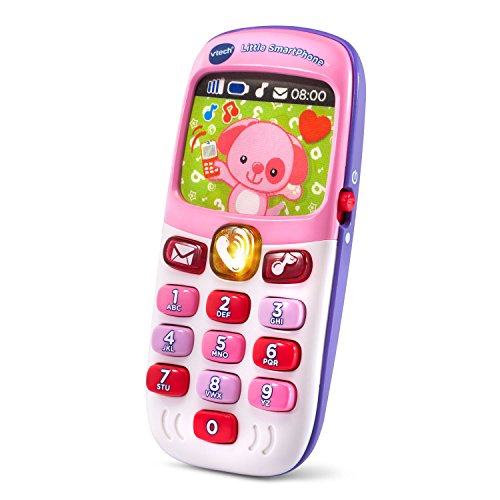
VTech’s Little Smartphone in pink focuses on essential pretend-play features like voicemail, music, and light-up buttons. A holographic puppy and Kitty image enhances imagination, while large color-coded buttons help toddlers learn numbers and colors. The compact size is ideal for small hands, and the design encourages pretend conversations, early vocabulary, and social pretend-play scenarios, making it a friendly, self-contained option for everyday activities.
Buying Guide: Key Purchase Considerations
- Age appropriateness: Look for age-graded toys with simple, intuitive controls and no small parts that could be a choking hazard.
- Durability and safety: Choose devices with robust plastic, rounded edges, and non-toxic materials. Handheld design should resist typical toddler drops and rough handling.
- Learning features: Favor toys that promote counting, vocabulary, and simple problem-solving through interactive prompts, songs, and videos.
- Audio and visual quality: Clear sound effects and bright visuals grab attention, but avoid overwhelming audio levels; adjustable volume is a plus.
- Brand familiarity vs. novelty: Reputable brands like LeapFrog, VTech, and Fisher-Price often provide reliable durability and compatibility with other educational toys.
Buying Guide: Product Comparisons
- Educational value: LeapFrog options emphasize counting and conversational play, while VTech focuses on brand-themed content and interactive prompts.
- Play style: Some toys prioritize storytelling and role-play (LeapFrog, Bluey), others emphasize classic mechanical play (Fisher-Price Chatter Telephone), and some blend music, lights, and interactive modes (Wolmund).
- Durability vs. complexity: Simpler pull-toy designs may withstand rough handling better; more features can offer richer play but may require more supervision and battery management.
- Portability: Most options are lightweight, but consider how easily the toy travels between rooms or while traveling with a child.
- Expandable learning: If you anticipate expanding play with other accessories or apps, prioritize brands that align with your existing toys to encourage consistent learning themes.
All five products offer engaging, age-appropriate pretend-play experiences that can support early language development, number familiarity, and imaginative storytelling. When selecting, balance features with your child’s interests, playing style, and tolerance for noise and complexity.