Best Push Bikes for Baby: Safe, Grow-With-Your-Child Trikes and Balance Bikes
Parents seeking a versatile push bike or baby trike will find several growth-friendly options that adapt from toddler to early childhood stages. This guide highlights five top picks, covering 1- to 5-year-olds with features like adjustable push handles, convertible modes, and safety harnesses. Each product supports development of balance, coordination, and confidence while offering parent-friendly control. Read on to compare designs, modes, and how each trike or balance bike grows with your child.
Summary Table
- Newyoo TR007 Khaki — 5-in-1 tricycle and balance bike with adjustable handle, seat, and pedals.
- RIDYEE 8-in-1 Tricycle — 8 modes, parent steering, canopy, and 5-point harness.
- SEREED Baby Balance Bike — 4 wheels, no-pedal balance bike for early stability.
- Radio Flyer 4-in-1 Stroll ‘N Trike — 4 stages, removable canopy, and long-term growth.
- INFANS 6-in-1 Tricycle — 6 modes, reversible seat, and safety features for growing toddlers.
Newyoo Toddler Tricycle With Push Handle
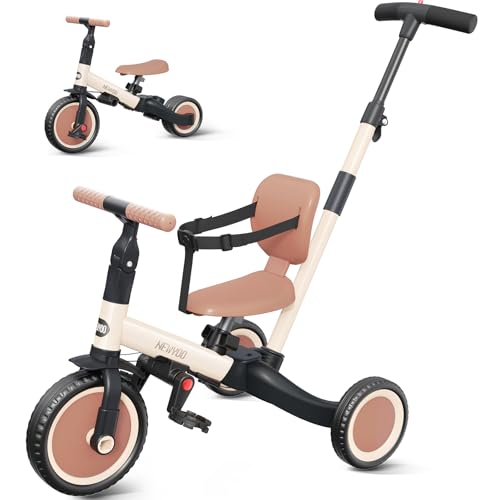
The Newyoo TR007 combines multiple riding modes in a single, adjustable unit suitable for 1–3 year olds. It transitions from push tricycle to balance bike and bike modes, adapting as your child grows. The push handle rotates 135 degrees for easy control, and the height-adjustable bar and seat enable parental guidance aligned with the child’s development. Pedals can be reconfigured across modes with a simple red-button adjustment, providing a smooth learning curve for early riders.
Key features include 5 modes (Push Tricycle, Push Balance Bike, Tricycle, Balance Bike, and Bike), a protective push handle, and a durable frame built for frequent practice. The included backrest and safety belt add essential security during early practice, while the adjustable components ensure continued use as your child increases balance and coordination. This option emphasizes safety, adaptability, and long-term engagement in outdoor play.
RIDYEE 8-in-1 Tricycle With Parent Steering

The RIDYEE 8-in-1 Tricycle evolves with children aged 1.5–5, offering eight modes that convert from a parent-guided trike to a walking tricycle, a baby balance bike, and a standalone ride-on. A tool-free design allows quick mode changes without tools, and a convertible canopy and 5-point harness enhance safety. The adjustable parent steering handle (two height levels) ensures comfortable control for caregivers of different sizes, while removable pedals and built-in footrests support growing riders and different learning stages.
SEREED Baby Balance Bike For 12–24 Months
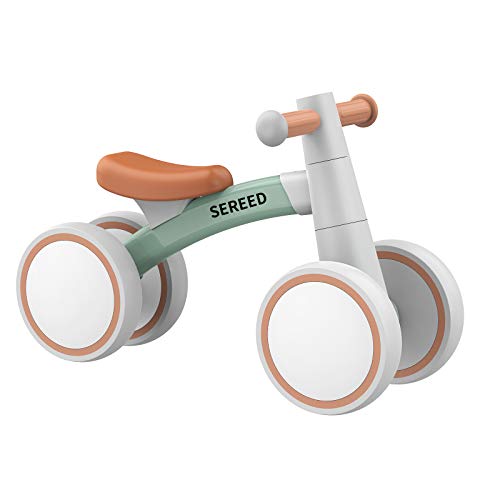
The SEREED balance bike is designed to introduce toddlers to steering and balance without pedals. Suitable for 12–24 months, it promotes core stability while kids learn to maneuver through 135° turning and gravity-assisted steering. A sturdy aluminum frame, non-slip TPU handle, and comfortable seat provide stability, and the closed-wheel design minimizes foot injuries. Ideal as an early-stage ride-on option to build confidence before pedaling.
Radio Flyer 4-in-1 Stroll ‘N Trike

Radio Flyer’s 4-in-1 Stroll ‘N Trike grows with your child from 12 months to 5 years. It offers four riding stages—toddler trike, steering trike, learn-to-ride trike, and classic trike—making it a long-lasting option. Removable accessories include an adjustable UV canopy, tray, headrest, and seat belt to support caregivers during outings. This model focuses on adaptability, safety features, and ease of transition between stages as your child gains balance and independence.
INFANS 6-in-1 Tricycle With Reversible Seat

The INFANS 6-in-1 Tricycle is designed for 9–60 months, offering six modes that adapt to development stages. Reversible seating and an adjustable push handle support parent guidance, with a removable canopy and safety harness for added protection. The front wheel’s foot switch aids transitions to learning modes, while a sturdy build ensures durability across activities. This option emphasizes growth alignment and safety during exploration and learning to ride.
Buying Guide: Key Purchase Considerations
- Growth potential: Look for trikes that transition through multiple modes (e.g., push trike, balance bike, learn-to-ride). The more stages offered, the longer the device remains useful as your child grows.
- Parent control vs. child autonomy: Identify whether the design prioritizes caregiver steering and control, or encourages independent riding as confidence builds. Adjustable push handles and clutch systems help tailor control to the environment.
- Safety features: A five-point harness, detachable safety bars, adjustable canopies, and sturdy frames are essential. Soft seats, non-slip pedals, and protective wheels reduce the risk of injuries during practice.
- Adjustability: Ensure seats, handlebars, and pedals can be moved to accommodate growing children. Quick-release or tool-free adjustments speed up mode transitions for busy families.
- Durability and materials: Aluminum frames and durable plastics are common. Check weight limits and wheel types (solid vs. air-filled) to balance ride comfort and maintenance needs.
- Portability and storage: Consider whether the unit folds, can be disassembled, or easily fits in a car trunk. This matters for travel and outdoor usage.
- Age suitability and guidance: Follow manufacturer age ranges and supervision tips. Start with supervised use in safe environments and gradually increase independent time as balance and coordination improve.
- Accessories and weather protection: Canopies, trays, and seat belts add convenience and safety, especially for outdoor play sessions in sunny or windy conditions.
Selecting the right push bike or baby trike requires balancing growth potential, safety, and family needs. The five options above provide diverse designs that adapt from early walking to independent riding, with parent-friendly control and a focus on long-term usability. When evaluating models, consider your child’s current abilities and the pace at which you expect them to progress to higher modes.