Best RC Airplanes for Beginners: Easy Starts and Safe Learning
Discover top beginner-friendly RC airplanes designed to help new pilots learn with confidence. This guide highlights five trusted models that emphasize stability, simple controls, and durable construction. Each pick offers features that support steady takeoffs, forgiving landings, and straightforward piloting, making them ideal for beginners and casual flyers alike.
| Product | Brand | Key Benefit |
|---|---|---|
| HAWK’S WORK 2 CH RC Airplane (Red) | HAWK’S WORK | Self-stabilization and beginner-friendly control |
| LEAMBE 4 Channel RC Plane (F4U Corsair) | LEAMBE | Three-level flight control for gradual learning |
| LEAMBE RC Plane 4 Channel (P-40 Warhawk) | LEAMBE | Stability with Xpilot stabilization and easy handling |
| SIMREX RC Plane for Kids | SIMREX | 6-axis gyro for ultra-stable flight |
| 4DRC Foam Remote Control Airplanes | 4DRC | Headless mode and LED visibility for beginners |
HAWK’S WORK 2 CH RC Airplane (Red)

Ready-to-fly design emphasizes stability with a built-in self-stabilization system. The lightweight foam structure helps it survive minor crashes, and the 2.4GHz radio control enables four-direction control. The system supports multi-plane operations without interference, aiding beginners who want to practice with a partner. This model is aimed at kids and new flyers seeking straightforward handling and dependable performance.
LEAMBE 4 Channel RC Plane – F4U Corsair

Designed for easy control, this model includes a simple operation mode to initiate aerobatics with minimal input. It takes off after wheel assembly and offers up to 15 minutes of flight time. Its longest flight distance reaches around 656 feet. The three-level flight control helps beginners maintain stable flight, with wheels allowing safe landings. Ideal for outdoor learning and gradual skill progression.
LEAMBE RC Plane 4 Channel – P-40 Warhawk

Offers easy control with a straightforward operation mode and assembly-friendly design. Flight time reaches about 15 minutes, and the aircraft supports both horizontal take-off and throw-off methods. A stability-focused flight control system helps new pilots build confidence, while its three-level control setup enables beginners to progress to more advanced aerobatics at their own pace.
SIMREX RC Plane For Kids

Equipped with a 6-axis gyro for stable flight and a 3-channel remote delivering directional and speed control. It offers two launch modes (hand throw or runway takeoff) and two speed modes with dual-motor power. The combination supports beginner-friendly handling while enabling straightforward progression to more dynamic maneuvers.
4DRC Foam RC Planes
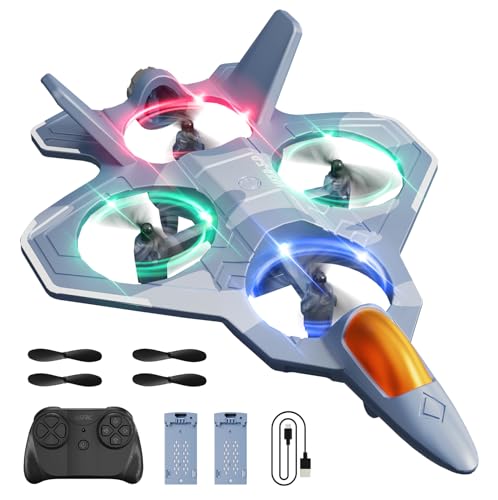
Offers a variety of modes including headless, altitude hold, and three speed levels. It features LED lights for day or night flying and options for 360° flips and throw-off launches. The simple controller and clear manual make it accessible for beginners seeking quick setup and immediate action in both indoor and outdoor environments.
Buying Guide
Key purchase considerations ensure the chosen RC airplane matches a beginner’s needs and flying environment:
- Stability and self-correction: Look for airplanes with built-in stabilization or gyro systems, which reduce wobble and crashes during early flights.
- Control channels and modes: Start with 3-4 channel planes offering straightforward controls. Three-level flight control and assisted modes help learners ease into aerobatics.
- Flight time and range: Beginners benefit from longer flight times (around 10-15 minutes) and a reasonable range (50-200 meters) to practice without frequent recharging.
- Durability and material: Foam construction and impact-resistant designs minimize damage from light crashes common to new pilots.
- Takeoff method: Hand-launch, runway takeoff, or horizontal takeoff options affect ease of use; select whichever aligns with your space and comfort level.
- Size and space: Smaller indoor-friendly models are ideal for rooms or gyms; larger outdoor models require open fields.
- Power and propulsion: Look for efficient motors that deliver smooth power without being overly aggressive, enabling controlled climbs and steady glides.
- Safety and supervision: For kids and beginners, supervise flights and review local rules for radio-controlled aircraft to ensure safe operation.
For beginners, the emphasis should be on forgiving handling, clear feedback from the aircraft, and reliable recoveries after misfires. The right model balances stability, ease of use, and the potential for skill growth, helping new pilots progress confidently from initial flights to more complex maneuvers.