Best Robot Kits for Kids: Top STEM Toys for Building, Coding, and Creative Thinking
Discover engaging robot kits designed to spark curiosity, foster problem-solving, and build hands-on engineering skills in children. The following selections emphasize durability, age-appropriate challenges, and opportunities for screen-free play or guided coding. Each kit supports critical thinking with modular builds, solar or electronic power options, and clear instructions to help young makers thrive.
style=”display:none”>Summary Table of Selected Products
| Product | Brand | Key Feature | Model Type |
|---|---|---|---|
| Sillbird 12-in-1 Solar Robot Building Kit | Sillbird | Sun-powered with 190 pieces for multiple builds | |
| BeAndge STEM Kits for Kids | BeAndge | Solar car, wind car, obstacle robot, tank, glider | |
| Bottleboom 13-in-1 Solar Power Robot Kit | Bottleboom | 13 different solar-powered designs | |
| Henoda Robotic Building Set | Henoda | 468+ pieces with app/remote control modes | |
| Sillbird Robot With Remote Control | Sillbird | 5-in-1 programmable robot, 488 pieces |
Sillbird 12-in-1 Solar Robot Kit

The Sillbird 12-in-1 Solar Robot Kit combines solar power with DIY building, ideal for screen-free play and hands-on exploration. With 190 pieces, children can assemble a variety of robot configurations while learning about renewable energy and mechanical design. The kit supports outdoor use under sunlight and indoors with a strong artificial light source, offering flexible play in different environments. Its focus on problem-solving and engineering basics makes it suitable for ages 8-13, encouraging steady progression as skills grow.
BeAndge STEM Kits for Kids (6-12)

This BeAndge bundle features five different STEM builds: a solar-powered car, a wind-powered car, an obstacle-avoidance robot, a transmission tank, and a glider. Designed for kids ages 8-12, the kit emphasizes collaborative learning and classroom-style exploration. It’s packaged as a gift-ready set and encourages experimentation with solar energy while developing engineering basics, problem-solving, and teamwork—great for family STEM sessions or school projects.
Bottleboom 13-in-1 Solar Power Robots

Bottleboom’s 13-in-1 Solar Power Robots provide diverse builds, including land and water movement, using solar energy and robust ABS components for durability. The included manual guides young builders through step-by-step assembly, while easy disassembly enables multiple iterations. Suitable for ages 8-12, the kit reinforces solar power concepts, mechanical design, and safe, hands-on experimentation that can extend to science fairs or family STEM days.
Henoda Robotic Building Kit
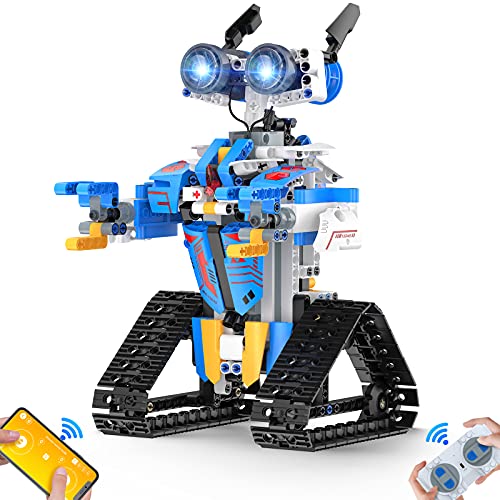
Henoda’s kit blends a large parts set (468+ pieces) with multiple control modes, including a smartphone app via Bluetooth, 2.4 GHz remote, and programming options. Kids can build versatile robots with rotating joints and interactive movement. The inclusion of STEM programming modes, gravity sensing, and diverse assembly challenges supports ongoing skill development for ages 8 and up, making it a strong choice for a growing technologist interested in robotics, engineering, and coding.
Lucky Doug Solar Power Kits
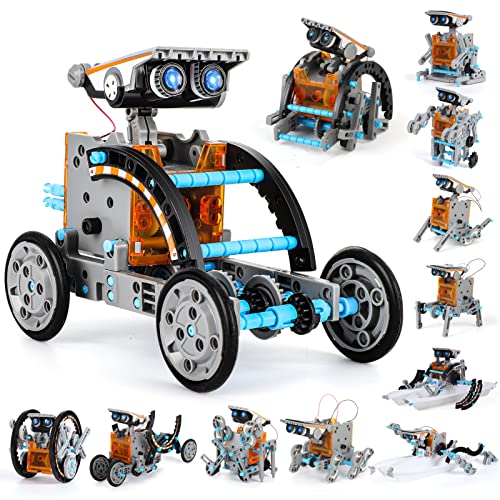
Lucky Doug offers a 12-in-1 solar robot kit designed to expose kids to multiple solar-powered designs, including crawling, rolling, and floating robots. The sun-driven operation encourages exploration of renewable energy concepts and engineering fundamentals. Clear assembly instructions help novices gain confidence, while the variety of builds supports extended engagement as children master more complex configurations.
Sillbird 5-in-1 Remote-Controlled Robot Kit

This Sillbird kit centers on a 5-in-1 programmable robot set with 488 pieces, blending hands-on building with flexible control via app and remote. Its dual-control approach supports both basic programming and practical motion experiments, offering extended play for ages 8 and up. The emphasis on screen-free design alongside digital control options provides a balanced robotics experience that can evolve into advanced coding projects.
ELEGOO UNO R3 Smart Robot Car Kit

ELEGOO’s UNO R3 kit provides a comprehensive entry to electronics, Arduino-based robotics, and coding. With 24 module parts, including obstacle avoidance and line tracing, it supports progressive learning from simple circuits to more complex programs, all accessible on Android and iOS interfaces. Clear assembly design and modular components help kids and beginners gain practical electronics knowledge while building functional robots.
TEACH TECH Hydrobot Arm Kit

The Hydrobot Arm Kit introduces hydraulics and mechanical engineering through a real, operable robot arm. Powered by water, it features six axes of motion and a 270-degree rotation range, offering a hands-on exploration of fluid power and automation concepts. No batteries are required, and the lever-operated gripper demonstrates practical control with tactile feedback, making it suitable for older children (12+) and curious lifelong learners.
Buying Guide: Key Purchase Considerations
- Age and Skill Level: Match complexity to the child’s age, motor skills, and prior robotics experience. Kits designed for 8-12 can scale to more advanced programming with time.
- Power Source: Solar-powered kits teach renewable energy concepts and require outdoor light, while battery-powered or app-controlled kits offer consistent performance indoors and more programming opportunities.
- Control Method: Decide between remote control, app control, or programmable blocks. Hybrid options provide a gentle learning curve for beginners and room to grow into coding.
- Learn-Through-Play Balance: Look for kits that blend hands-on assembly with clear learning outcomes (engineering concepts, problem-solving, and science fundamentals).
- Durability and Safety: Choose kits with smooth-edged pieces and non-toxic materials. Strong connectors and sturdy shells reduce breakage during play.
- Expandable Ecosystem: Some kits enable future upgrades or additional sets. An expandable system supports continued interest as skills advance.
- Instruction Quality: Clear, illustrated manuals accelerate learning and reduce frustration. Check for step-by-step guides and online tutorials if available.
- Social and Family Learning: Consider kits that support group building or classroom-style projects to encourage collaboration and shared problem-solving.
Across the options, buyers should consider whether they prefer solar power for environmental lessons or programmable, app-based kits that emphasize coding and automation. Each kit listed provides distinct pathways to develop STEM literacy, from foundational building to complex programming, ensuring diverse experiences for kids with varying interests and learning styles.