Best Science Kit for 10 Year Olds: Fun Experiments and Hands-on Learning
The right science kit can spark curiosity, build critical thinking, and make learning exciting for 10-year-olds. This guide highlights five top-rated kits that blend engaging experiments with clear explanations, safe materials, and a strong STEM focus. Each product below is selected for age-appropriate challenges, repeatability, and broad educational value—from chemistry and biology to physics and engineering. Use the quick comparison table to compare highlights before choosing the kit that best fits a child’s interests and your budget.
| Product | Brand | Key Focus |
|---|---|---|
| National Geographic Gross Science Kit | Blue Marble | Gross science, biology, chemistry basics |
| National Geographic Science Magic Kit | Blue Marble | Science magic, demonstrations, physics & chemistry |
| Thames & Kosmos Mega Cyborg Hand | Thames & Kosmos | Mechanics, pneumatics, engineering |
| Doctor Jupiter Ultimate Science Kit | Doctor Jupiter | Comprehensive chemistry & general science |
| National Geographic Magic Chemistry Set | Blue Marble | Chemistry experiments with magic-themed tricks |
National Geographic Gross Science Kit

Designed to engage curious kids with “gross” but safe experiments, this kit includes materials for 15 core activities plus a bonus set of 30 experiments using common household items. Instructions are kid-friendly with illustrations to help guide each step, combining entertainment with practical science concepts. The emphasis on biological and chemical exploration encourages observation, hypothesis formation, and data collection—key scientific habits for young learners. Ideal for solo play or guided family science sessions, it supports curiosity while reinforcing foundational STEM skills.
What to expect
Experiments often revolve around reactions, materials that demonstrate properties, and hands-on activities that reveal how science connects to everyday life. The included guide helps kids stay organized, while the bonus experiments extend learning beyond the initial set, fostering independent experimentation.
National Geographic Science Magic Kit

This kit blends science with the wonder of magic tricks, offering 100+ experiments and a magic kit experience. Each demonstration is designed to captivate and educate, turning abstract concepts into tangible, repeatable effects. A magic wand and gloves help kids perform tricks that illustrate physics and chemistry principles, encouraging performance skills along with scientific reasoning. The activities promote inquiry, experimentation, and the joy of discovery in a structured, age-appropriate format.
What to expect
From bending metal with water to vanishing test tubes, the kit demonstrates core science ideas through captivating visuals. The included materials and clear, illustrated instructions help children reproduce effects while learning the science behind them.
Thames & Kosmos Mega Cyborg Hand

This hands-on pneumatics project lets kids build a wearable hydraulic hand controlled by their own fingers. No motors or batteries are required; air pressure and simple hydraulics drive movement, with adjustable finger joints for precise gripping. The kit emphasizes engineering design, problem-solving, and iterative testing as children experiment with different configurations to achieve desired motion. It’s well-suited for curious minds who enjoy tinkering and learning about physical systems in a tangible way.
What to expect
Steps guide readers through assembly, testing, and refinement. Children practice cause-and-effect reasoning as they explore how air pressure translates into mechanical motion, and they can reconfigure parts to explore different grasping dynamics.
Doctor Jupiter Ultimate Science Kit

With over 135 experiments, this kit covers a broad spectrum of science topics, from color-changing reactions to crystal growing and underwater volcanism. The inclusive range gives kids a robust science experience that can grow with them as their skills advance. The manual provides clear, kid-friendly instructions and encourages independent exploration, while still giving parents and teachers a solid framework for guided learning. It’s a strong option for long-term science engagement and curiosity development.
What to expect
Experiments emphasize observation, hypothesis testing, and recording results. The kit’s breadth supports interdisciplinary learning—linking chemistry concepts with observation skills and problem-solving strategies that are valuable across STEM subjects.
National Geographic Magic Chemistry Set
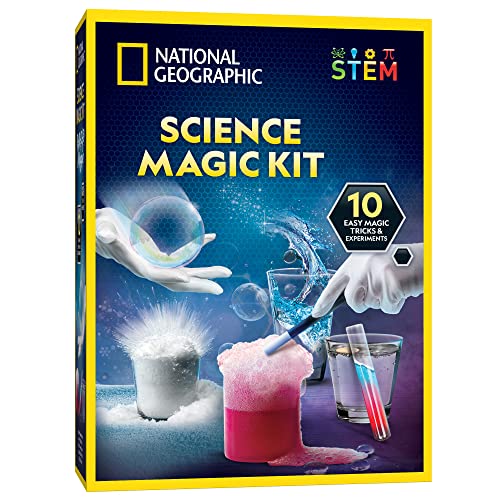
Combining chemistry experiments with visually striking magic tricks, this set emphasizes engaging demonstrations that illustrate chemical reactions, color changes, and physical properties. The included guide features kid-friendly, illustrated instructions and accessible explanations of the science behind each effect. The dual focus on magic and chemistry helps sustain interest, especially for learners who enjoy showmanship and practical demonstrations alongside hands-on experiments.
What to expect
Kids perform safe, visually appealing experiments that highlight fundamental chemistry concepts. The magic angle adds motivation to explore, compare results, and articulate the science behind observed phenomena.
Buying Guide: Key Purchase Considerations
When choosing a science kit for a 10-year-old, consider the following perspectives:
- Learning goals: Decide whether the child is more interested in chemistry, physics, biology, or engineering. Look for kits that balance experimentation with explanation to reinforce concepts.
- Age appropriateness: Ensure the kit complexity aligns with the child’s current skills, yet offers room to grow through more challenging activities.
- Safety and materials: Check for non-toxic components, clearly labeled hazard information, and age-appropriate supervision requirements.
- Instruction quality: Prefer kits with clear, illustrated, step-by-step guides and explanations of the science behind each activity.
- Durability and reuse: Some kits include reusable components or a large number of separate experiments, offering long-term value.
- Expandability: Consider kits that offer additional experiments or compatible accessories to extend learning beyond the initial set.
- Engagement and presentation: A kit that includes demonstrations, magic-like effects, or hands-on building can sustain interest longer.
To maximize learning, pair kit activities with accompanying discussion that asks questions like “What happened? Why did this occur? How could you test a related variable?” This encourages scientific reasoning and helps translate hands-on work into lasting knowledge.