Best Science Kits for Elementary Students: Hands-on Learning That Spark Curiosity
Engaging, age-appropriate science kits help elementary students explore chemistry, physics, geology, and engineering through hands-on activities. Below is a curated set of kits that cover water science, earth science, robotics, and more, designed to support classroom learning and at-home experimentation. The selections emphasize safe materials, clear instructions, and activities that align with typical elementary science curricula.
| Product | Brand | Key Focus | Age Range |
|---|---|---|---|
| 4M Clean Water Science | 4M | Water purification basics, desalination concepts | 8+ |
| Carson Dellosa Stem Challenges | Carson Dellosa Education | Physical, life, earth, and space science activities | 8-12 |
| 5 Set Individual STEM Kit | BeAndge | Wind and electric machines, hands-on problem solving | 6-12 |
| STEM Rock Science Kit | Toysmith | Geology, rock testing and identification | 8-12 |
| 5-Set STEM Robotics Kit | WESAYEE | Robotics, building wind-powered and solar-powered cars | 6-12 |
4M Clean Water Science

The 4M Clean Water Science kit demonstrates fundamental desalination concepts and the scientific approach to separating salt from water. It includes a plastic filter system, active carbon, sand, rock, and filter paper, enabling students to observe filtration processes and discuss environmental implications. This kit is suitable for science fairs or classroom demonstrations and supports inquiry-based learning about water quality and environmental stewardship.
With user-friendly components and clear, beginner-friendly instructions, the kit helps young science enthusiasts build confidence in formulating hypotheses, testing outcomes, and documenting results. While designed for curiosity-driven exploration, it also aligns with themes found in middle-to-late elementary science curricula, offering a gateway into chemistry and environmental science.
The Everything Kids’ Science Experiments Book
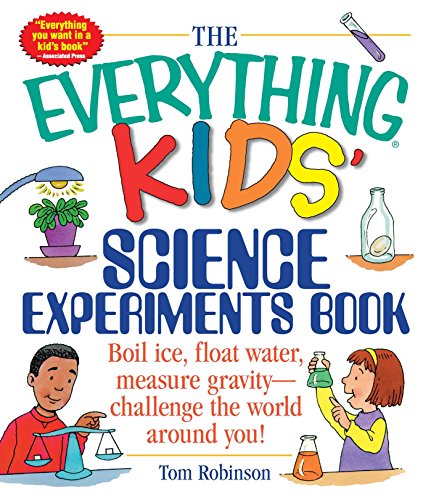
This comprehensive collection offers a broad range of hands-on experiments across multiple science domains, including physics, chemistry, biology, and earth science. It serves as a resource to supplement classroom activities, spark student-led investigations, and provide step-by-step projects suitable for school clubs or at-home learning. The book format supports independent reading as well as guided instruction.
While not a single-kit experience, the book’s accessible explanations and varied experiments help elementary students build core scientific inquiry skills, such as making predictions, controlling variables, and communicating results. It complements kits that focus on specific topics by offering diverse explorations that broaden a youngster’s science literacy.
Carson Dellosa Stem Challenges

Carson Dellosa Stem Challenges provides a boxed set of 30 activity cards that cover physical, life, earth, and space science topics. Each card includes directions, required materials, a challenge explanation, and hints. The set helps teachers and parents deliver structured, hands-on activities that encourage critical thinking, problem solving, and collaboration among students aged roughly 8 to 12.
Structured for easy storage, the cards come with a divider and a compact footprint, making them suitable for classroom centers, after-school programs, or homeschool setups. This kit emphasizes procedural thinking and scientific reasoning, supporting learners as they test ideas and learn from outcomes.
5 Set Individual STEM Kit for Kids

BeAndge’s five-pack STEM kit combines wind-powered and other small-scale machines, delivering a practical introduction to basic robotics, engineering, and physics. Each set is individually packaged with complete accessories and a dedicated screwdriver, supporting independent assembly and guided learning. The kits are designed for children aged 6–12, with varying project difficulty to accommodate different skill levels.
The kit emphasizes hands-on problem solving and conceptual understanding: students build, test, and refine simple devices, learning cause-and-effect while practicing safe, iterative design. It aligns well with classroom centers or family science nights that aim to showcase early engineering principles alongside science exploration.
STEM Rock Science Kit
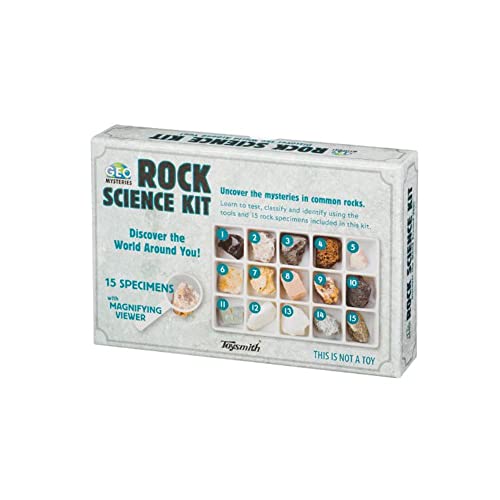
The Toysmith Rock Science Kit focuses on geology and mineralogy, equipping young geologists with fifteen rock specimens, a magnifying viewer, and an identification guide. Students learn how to test, classify, and identify different rock types, cultivating observational skills and scientific vocabulary. The kit can be used for guided lessons or independent exploration, linking geology concepts to real-world environments.
Those curious about earth science benefit from a structured approach that invites hands-on investigation. The included guide supports learners in building a basic rock catalog, making it suitable for science centers, homeroom projects, and individual projects that align with elementary science standards.
STEM Robotics Kit by WESAYEE

This five-set robotics kit from WESAYEE introduces elementary students to building and operating wind-powered cars, a solar-powered car, a tank, a glider, and a wind-powered car. The project mix provides a broad exposure to different energy concepts, mechanical design, and problem-solving. It supports collaborative projects, classroom centers, and individual curiosity, with an emphasis on safe, beginner-friendly assembly and testing.
While batteries are not included, the kit’s varied builds help students compare energy sources and engineering trade-offs. It’s suitable for science fairs and classroom demonstrations, offering visible outcomes that communicate basic physics and engineering principles to young learners.
Buying Guide: Key Purchase Considerations
When selecting science kits for elementary students, consider the following factors to ensure engaging, age-appropriate learning outcomes:
- Learning goals: Identify subjects (chemistry, physics, geology, robotics) and align with curriculum standards or science fair requirements.
- Age and skill level: Choose kits labeled for the child’s age and adjust complexity for advancing learners to maintain engagement without frustration.
- Safety and materials: Look for non-toxic components, clear safety instructions, and sturdy, reusable pieces for long-term use.
- Instruction quality: Favor kits with step-by-step guides, diagrams, and prompts for observation, hypothesis, and documentation of results.
- Scalability: Consider kits that offer multiple activities or expandable components to grow with the child’s abilities.
- Storage and organization: Boxes or dividers help keep materials organized and accessible for ongoing projects.
- Teacher and parent resources: Supplemental lesson ideas, discussion prompts, and alignment with science standards can enhance outcomes.
- Budget and value: Weigh the number of activities, quality of materials, and potential reuse before purchasing.
In evaluating options, balance a single-topic kit with multi-topic sets to expose students to a broader range of scientific ideas. Consider combining a core kit like a water science or rock science set with a book or card-based activity collection to reinforce concepts through reading and structured challenges. Finally, factor in opportunities for collaboration, as teamwork strengthens scientific communication and inquiry skills in young learners.