Best Sensory Boxes for Toddlers to Explore Hands-on Learning
Sensory boxes offer engaging, hands-on play that helps toddlers develop fine motor skills, language, and imaginative thinking. This guide highlights five top sensory box options, each chosen for safe materials, age-appropriate design, and rich play possibilities. Explore the selections below to find the right fit for curious little learners and screen-free fun.
| Product | Brand |
|---|---|
| Construction Zone Sensory Bin | Creativity for Kids |
| Montessori Sensory Bin Tools Kit | Yowlieu |
| Pet Sensory Bin | Vextronic |
| Outer Space Sensory Bin | Creativity for Kids |
| Ocean & Sand Sensory Bin | Yeonha Toys |
Construction Zone Sensory Bin By Creativity For Kids

This all-in-one playset builds a mini construction site with interactive elements and a contained space. Included items are a reusable storage bin, 2.5 pounds of sensory sand, a mini dump truck, cement mixer, roller and shovel tools, construction signs, cones, pebbles, and a lid that doubles as a play surface. The kit emphasizes tactile exploration, fine motor development, and imaginative storytelling, designed for children ages 3 and up, with play that requires no screens.
Montessori Sensory Bin Tools Kit
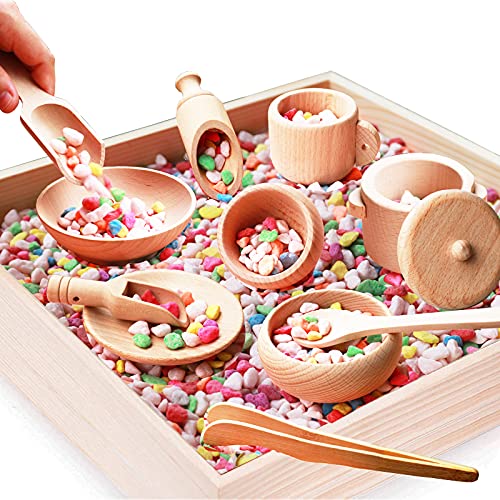
This wooden box comes with 11 sensory tools, offering storage and a complete set for hands-on learning. Children can pour grains, beans, oats, rice, rocks, or sand, using scoops, tongs, pots, cups, bowls, and plates to pour, transfer, pick, and stack. The kit supports fine motor skills, practical life exercises, and pretend play in a child-safe wooden design. Note that some pictured contents may vary; wooden materials are hand-sanded for smooth edges.
Pet Sensory Bin For Toddlers

Designed to simulate caring for pets, this bin includes a storage box with 2.2 pounds of sensory sand, six dog and cat figures, pet foods, bowls, a house, carrier, bed, and various accessories. The set encourages role-play, feeding, bathing, and walking activities that promote fine motor skills, hand-eye coordination, and social-emotional development. The sensory sand is non-toxic, non-sticky, and easy to shape, meeting safety standards for young children.
Outer Space Sensory Bin By Creativity For Kids

Blast off into a galaxy-themed sensory bin that includes glowing stars, 2.5 pounds of space rocks, an astronaut, a squishy alien, and more. This self-contained bin is designed for easy use and storage, with a lid to keep contents contained between play sessions. Sensory play here supports exploration, language development, and imaginative play, ideal for 3-year-olds and up. The kit serves as a standalone activity and a giftable learning tool with STEM-friendly potential.
Ocean & Sand Sensory Bin With Lid

This 42-piece kit centers on ocean life and sandy play, including 2 pounds of sensory sand, 15 sea creatures, foam balls, sand sifters, shovels, rollers, and castle models. The magnetic-sand activity is easy to shape and long-lasting, offering a durable setup for repeated co-play. Suitable for toddlers and preschoolers, the set supports early science concepts, storytelling, and collaborative play in a safe, age-appropriate package.
Buying Guide: Key Considerations For Choosing Sensory Boxes
- Age suitability and safety: Look for non-toxic materials, rounded edges, and age-appropriate contents tailored to toddlers 3-5 years old.
- Material variety: A mix of sand, water-safe elements, and small manipulatives can support different senses—tactile, visual, and auditory.
- Storage and portability: A sturdy lid or container that doubles as a play surface helps keep play spaces tidy and ready for use.
- Open-ended play: Choose boxes that encourage imagination and storytelling rather than prescriptive tasks, enabling flexible learning experiences.
- Skill development: Consider kits that promote fine motor skills, hand-eye coordination, language, and social interaction through pretend play.
- Maintenance and longevity: Reusable components and easy-clean surfaces extend play value and simplify cleanup.
- Durability vs. cost: Wooden tools and durable plastic parts often endure longer, while smaller plastic pieces may require more supervision.
From construction zones to outer space and ocean adventures, these sensory boxes provide diverse, screen-free activities that adapt to a child’s evolving interests. Parents and caregivers can rotate boxes to maintain novelty, mix tools for new challenges, and pair play with guided storytelling to deepen learning outcomes.