Best Sensory Mats for Autism: Top Picks for Calming, Learning, and Engagement
Finding effective sensory tools can support children with autism by promoting calmer focus, tactile exploration, and motor development. This guide highlights five high-quality sensory mats and tiles designed for home, classroom, or therapy spaces. Each option emphasizes safe materials, engaging textures, and durable construction to withstand active play. Use this overview to compare textures, sizes, and multifunctional features that align with a child’s needs and your budget.
| Product | Brand | Size / Type | Key Benefit |
|---|---|---|---|
| Maitys 7 Pcs Sensory Mats | Maitys | 9.8 x 9.8 inches each, 7-piece set | Colorful, splice-together textures for stimulation |
| KIGLY Large Sensory Mats | KIGLY | 9″x9″ each, 9 mats | Multi-texture surfaces, non-slip, classroom ready |
| CHESLICR 4PC Wall Fidget Toys | CHESLICR | assorted silicone mats | Bright, tactile fidget textures for quick calm-downs |
| Edusense Sensory Mat for Autism | edusense | Classical textured puzzle play mat | Six raised patterns, versatile use |
| SMALL FISH 4-Pack / 9×9-12×12 Tiles | SMALL FISH | 12″x12″ tiles, liquid lava effect | Dynamic visuals, gross motor activities |
Maitys 7 Pcs Sensory Mats For Autistic Children

The Maitys set includes seven massage game mats that interlock to form a larger play surface. Each tile measures about 9.8 x 9.8 inches, making them kid-friendly for feet or hands. The colors are bright and varied to attract attention and support color recognition while offering tactile variety through textured surfaces. Constructed from quality PVC, the mats are designed to be soft yet durable, with minimal odor and minimal risk of tearing. This kit is well-suited for home playrooms or therapy spaces where modular setups are beneficial for different activities.
KIGLY Large Sensory Mats For Autistic Children
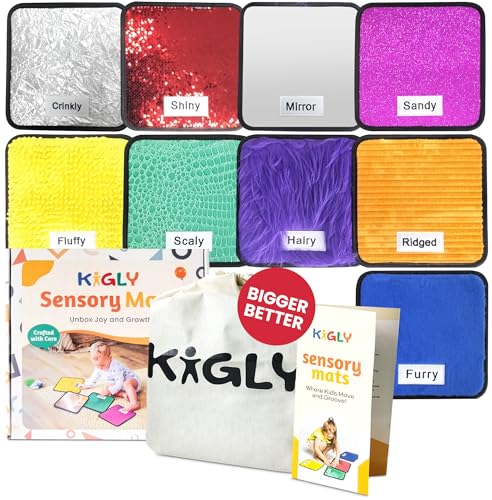
The KIGLY mats provide robust multi-sensory stimulation through diverse textures, color-changing surfaces, and audible elements like crinkly textures and mirrors. The 9×9 inch tiles come in a Rainbow of Textures and include a guide with suggested activities to maximize learning and engagement. The larger footprint compared with smaller tiles can support collaborative play and more expansive exploration, while the non-slip back helps maintain stability during physical activities in classrooms or homes.
CHESLICR 4PC Sensory Wall Fidget Toys

CHESLICR offers a compact set of silicone sensory mats with four bright colors and four distinct textures. These mats are designed to attract attention and invite hands-and-feet exploration, promoting calm and focus. The mats are made from food-grade silicone with a non-slip backing, making them easy to handle, clean, and durable for daily use at home or school. They’re especially handy for quick sensory breaks in busy environments or as portable mats for therapy sessions.
Edusense Sensory Mat For Autism Children

Edusense presents a textured puzzle-style play mat with six raised patterns designed to stimulate tactile perception and coordination. The mat’s bright colors support visual recognition while the textured surfaces add depth to sensory exploration. Marketed for both children and adults, this mat can be used in educational settings, therapy rooms, or relaxation areas at home. Its versatile design supports a range of activities from stepping exercises to seated tactile play, making it a flexible sensory tool.
SMALL FISH Sensory Floor Tiles 4-Pack

Small Fish offers a 4-pack of 12″x12″ liquid-filled tiles that create a dynamic lava-like visual with every step or touch. The PVC surface combines with an anti-slip EVA backing to guard against slips while the liquid inside provides a captivating, ever-changing display. The variety of colors supports color learning, and the tiles are designed to tolerate everyday classroom or home use. This set is ideal for active families seeking an engaging way to work on balance and gross-motor skills.
Sensory Mats Buying Guide
Key considerations for choosing the right sensory mats include texture variety, size and portability, safety, ease of cleaning, and intended setting. For home use, larger interlocking mats can offer more play space, while compact tiles are useful for travel or therapy sessions. Texture variety helps with tactile discrimination, while visuals—such as bright colors or reflective surfaces—support attention and engagement. Durability and safety standards ensure the mats withstand active movement and reduce the risk of tearing or slipping. Consider whether the child benefits more from calm-down activities, gross motor play, or a mix of both.
Texture and surface design should align with the child’s sensory profile. For a child who enjoys tactile feedback, multi-textured mats with crinkly, furry, or ridged surfaces can provide diverse input. For those who seek visual stimulation, lava tiles or reflective surfaces can enhance attention and curiosity. The safety profile matters: non-toxic materials, rounded edges, and non-slip backs reduce hazards during movement and play. Finally, assess compatibility with your environment—home rooms, classrooms, or therapy spaces—and whether you want mats that are easy to store or can be reconfigured into larger layouts.
Pricing and value often hinge on the number of pieces, the variety of textures, and the versatility of the set. Some kits include activity guides or lesson plans that help caregivers and educators implement structured sensory activities. If flexibility is important, choose systems that interlock or are modular so you can grow a play area over time. Finally, consider cleaning convenience: many mats are machine-washable or wipe-clean, which is essential for frequent use in kids’ spaces.