Best STEM Boxes for Kids: Creative Learning Kits for Young Builders
Discover top STEM boxes designed to spark curiosity in children. Each kit blends hands-on construction with critical thinking, helping kids explore science, technology, engineering, and math through engaging activities. Below, five standout options cover a range of ages, from preschool-friendly builds to more complex projects that challenge older kids. Safe materials, durable design, and clear instructions make these kits suitable for group play or solo exploration, fostering teamwork and independent problem-solving alike.
| Product | Brand |
|---|---|
| NXONE 195 PCS Educational STEM Toys for Boys and Girls | NXONE |
| Huaker 180-Piece Large STEM Building Toys | Huaker |
| Sillbird 12-in-1 Solar Robot Building Kit | Sillbird |
| LINAYE 24 Packs STEM Kits | LINAYE |
| Poraxy 5 in 1 STEM Kits for Kids | Poraxy |
NXONE 195 PCS Educational STEM Toys for Boys and Girls
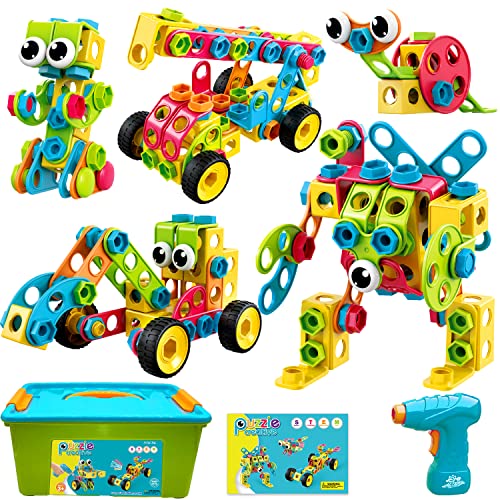
The NXONE set includes 195 pieces, a storage box, and an electric drill, enabling multiple children to build together. The kit emphasizes hands-on construction to develop imagination, creativity, hand-eye coordination, cognitive skills, and logical thinking. It is designed to be safe for kids, with phthalate, lead, cadmium, and BPA-free materials and no sharp edges. The large piece count supports collaborative play and scalable projects, making it a versatile option for classrooms or family playtime.
Huaker 180-Piece Large STEM Building Toys

Huaker offers a 180-piece set designed to spark creativity through engineering-focused play. The Learn-to-Build guide introduces kids aged 4+ to crafting cars, dinosaurs, and robots, helping strengthen color recognition, imagination, and critical thinking. The kit is positioned as suitable for classroom use and family projects, with the potential to support teamwork and collaborative problem solving. It emphasizes safe, durable components and the freedom to design multiple configurations from the provided blocks.
Sillbird 12-in-1 Solar Robot Building Kit

This solar-powered robot kit from Sillbird combines 12 projects in one set, encouraging outdoor and screen-free play. The solar mechanism introduces renewable energy concepts while supporting engineering problem solving, with 190 pieces that enable kids to build and optimize their own solar bot. The kit is suitable for outdoor use, and it provides a tangible way to explore energy sources, motion, and basic robotics, all without reliance on batteries.
LINAYE 24 Packs STEM Kits

LINAYE’s wooden STEM set features 24 building kits, including electric Jeeps, pull trolleys, gliders, bridges, fans, and windsocks. The wooden pieces are designed for safe handling and precise fits, supporting hands-on exploration of engineering principles, cause-and-effect, and spatial reasoning. The kit is described as classroom- or party-friendly, suitable for collaborative projects and capable of turning traditional play into structured STEM learning while emphasizing durability and safety.
Poraxy 5 in 1 STEM Kits for Kids
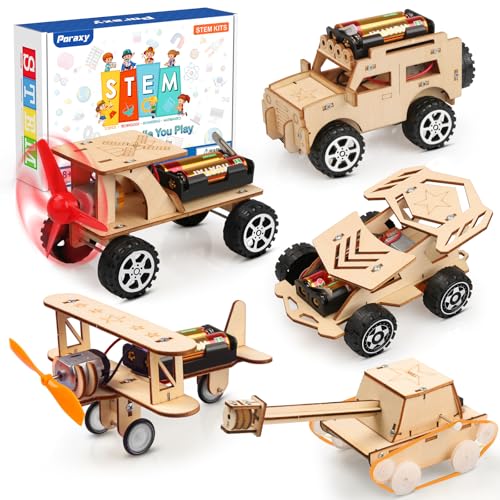
The Poraxy 5 in 1 STEM kit presents five different model cars, offering a mix of building experiences to broaden exposure to mechanical design and engineering concepts. The set emphasizes practical skill development, encouraging children to assemble and understand how models function, while fostering imagination and problem-solving. It is positioned as suitable for age ranges 8-12, promoting independent learning with guided complexity and cooperative projects.
Buying Guide: Key Purchase Considerations
- Age range and complexity: Match the kit’s complexity to the child’s age and prior experience. Some sets are beginner-friendly with guided instructions, while others offer advanced projects that challenge older kids.
- Learning goals: Consider whether the kit emphasizes basic building skills, electronics, renewable energy, or engineering design. Some kits integrate science concepts with hands-on construction, others focus on teamwork and collaboration.
- Materials and safety: Look for non-toxic materials, rounded edges, and certifications indicating child safety. Wooden blocks, BPA-free plastics, and low-risk electronics are common features.
- Expandability: Check whether the kit supports future projects beyond the included pieces. Kits with modular components or open-ended parts can grow with a child’s skills.
- Storage and durability: A sturdy storage solution helps keep parts organized and extends the life of the kit, especially for group use or classroom settings.
- Educational value vs. entertainment: Balanced kits provide both engaging play and genuine STEM learning, appealing to both curiosity and academic growth.
When selecting a STEM box for kids, consider the environment where it will be used (home, classroom, or library), the number of participants, and the potential for cross-age collaboration. Safe, durable kits with clear instructions and scalable challenges tend to provide the most value for ongoing learning and imaginative play.