Best Toy Drones for Fun, Safe Indoor Flying and Easy Gesture Control
Finding the right toy drone for kids and beginners involves balancing safety, ease of use, and engaging features like LED lights and gesture controls. The following hand-operated and beginner-friendly drones are designed for indoor play, offering 360° flips, obstacle avoidance, and durable shells. This guide highlights five top options, with practical buying considerations to help you choose a drone that’s safe, fun, and easy to learn for young pilots and new flyers alike.
| Product | Brand | Key Benefit |
|---|---|---|
| Hand Operated Flying Toy Drone | ETPlanet | Gesture control with 360° motion sensing |
| Scoot Hand Operated Drone | Force1 | Indoor hover with obstacle sensors |
| Q9s Drones for Kids | HASAKEE | Altitude hold and headless mode for beginners |
| DUSFAN 2025 AI Flying Orb Ball | DUSFAN | Mini hand-operated UFO with LEDs |
| HOFMOC Mini Drone | HOFMOC | Throw-to-go, 2 batteries, guards |
The selections below focus on models with safe designs, beginner-friendly controls, and engaging LED lighting. Each entry includes a quick look at what makes it stand out and how it supports safe, supervised play for kids and new flyers alike.
Hand Operated Flying Toy Drone For Kids

ETPlanet’s hand-controlled UFO drone emphasizes gesture induction and 360° motion sensing for precise flight control. The design uses a compact, safe webbed shell to protect hands, walls, and furniture from the propellers, reducing the risk of accidental injuries or damage during playful flights. The LED lights blink rapidly during advanced maneuvers, including a 360° flip, which adds a dynamic visual element that appeals to kids and curious beginners alike. The drone is described as suitable for indoor and light outdoor use, with a smooth flight pattern that supports easy learning and safe catching after a flight.
Key features include 360° motion sensors that detect objects for obstacle avoidance, a lightweight PP material build, and a protective shell to minimize crashes. The drone can hover and respond to hand gestures, offering an approachable entry point for children ages around 6 and up and for families seeking interactive, screen-free play. Battery life and exact flight duration aren’t specified here, but the emphasis on safety and ease of use makes it a solid option for first-time pilots.
Scoot Hand Operated Drone For Kids Or Adults
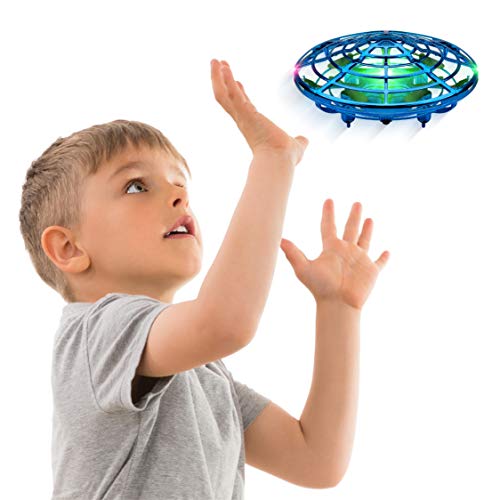
Force1’s Scoot drone is presented as a versatile indoor hover drone with hand-gesture guidance and bright LED lighting. Its webbed shell design protects people and furnishings from propeller contact, supporting safer play in tight spaces. The model is positioned as the original Scoot drone within Force1’s family, which implies a user-friendly interface suitable for beginners and family-friendly activities, such as casual games and catch-style play. The toss-to-launch feature and obstacle-avoidance sensors help new pilots learn control in a forgiving environment, making it easy to practice accuracy and timing indoors.
With a lightweight build and simple flight dynamics, Scoot emphasizes intuitive learning. The LED accents offer engaging visibility during flights, and the one-button takeoff/landing behavior can simplify the learning curve for younger pilots. As with other indoor drones, toy durability and battery life are important considerations for extended play sessions.
Q9s Drones For Kids
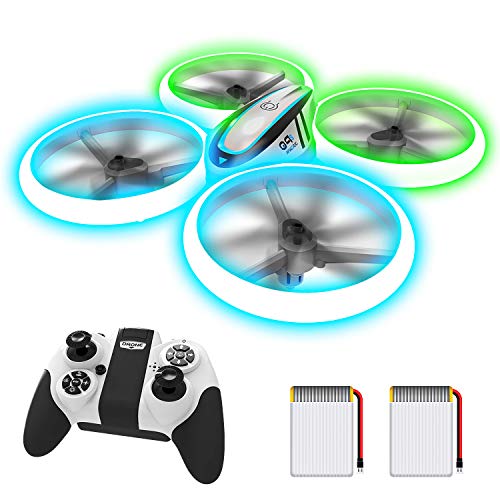
HASAKEE’s Q9s focuses on beginner-friendly features with altitude hold and a headless mode, simplifying orientation for new pilots. The drone uses bright LED lighting in blue and green to create a visually appealing flying experience. Sturdy propeller guards are noted to enhance safety by reducing the risk of contact injuries, an important consideration when kids are learning to pilot. The design implies resilient performance against common beginner mishaps, including minor crashes or drops, while maintaining stable flight to help new flyers build confidence.
Three speed options and a one-button takeoff/landing function contribute to a forgiving learning curve. The drone’s overall emphasis on stability, simple control schemes, and kid-friendly lighting makes it a good choice for families seeking an approachable, entry-level option that can grow with a child’s growing piloting skill.
DUSFAN AI Flying Orb Ball Toy

The DUSFAN 2025 AI Flying Orb Ball emphasizes a mini hand-operated drone concept with a focus on LED-enhanced flights and a lightweight, durable mesh shell. The product description highlights a single, straightforward indoor hover experience suitable for children in the 8–13 age range, though younger kids under supervision may also enjoy the activity. The orb design supports a variety of play styles as children toss and catch it, promoting active engagement and coordination. The lightweight build and internal safety features align with common expectations for beginner-level air toys.
With a 360° enclosure protecting the mechanism and an automatic stop feature when contact occurs, the toy encourages repeated, low-risk play. LED lights add visual appeal during flights, which can enhance interest and motivation for practice. Families looking for a casual toy that blends tech-like appeal with safe, repetitive play may find this model appealing for group or solo play sessions.
HOFMOC Mini Drone For Kids 8-15

HOFMOC’s mini drone is described as beginner-friendly with multiple features to support easier learning. The one-key takeoff or throw-to-go function helps new pilots get airborne quickly, while full propeller guards provide an added safety margin during training flights. Headless mode reduces orientation confusion, making it easier to understand directional controls. The drone includes two upgraded 1000mAh modular batteries, offering longer flight times and shorter recharge intervals thanks to USB-C charging, which reduces downtime between flights. This combination is attractive for families seeking extended play sessions without frequent interruptions.
As a starter drone set, the model targets children and new flyers, with a balance of safety features, simple operation, and visual appeal through LED lighting. The modular battery design further supports practical long-term use, which is beneficial in households where frequent flights are expected during learning phases.
Force1 Scoot Pro Hand Operated Drone

Force1’s Scoot Pro represents an upgraded take on the hand-operated drone concept, featuring patented motion sensors and enhanced guidance to minimize collisions with people and objects in the home. Indoor hover capabilities, altitude hold, and a “hamburger-style” catch finish provide a simple, repeatable play pattern that supports educational play and cooperative games. The LED projection and 360° flip capability offer engaging visual feedback for beginners, helping new pilots understand spatial orientation and timing during flight sequences. The drone’s design emphasizes safety, control, and approachable complexity for growing pilots.
The inclusion of advanced sensor technology in a kid-friendly package suggests a product aimed at users who want more precise control without sacrificing the ease of learning. This model suits families that plan to use drones for ongoing skill development, rather than one-off experiments, and it aligns with safe indoor use expectations for younger pilots guided by adults.
PYMSRTY Flying Toy Drone

PYMSRTY presents a gesture-controlled mini drone with 360° motion sensors and vibrant LED lighting. The product emphasizes a soft, durable mesh design built from child-safe PP material, offering a lightweight, impact-resistant shell designed to withstand typical playtime bumps. It supports indoor use and is pitched as appropriate for children aged around 6 and older, with a design focus on beginner-friendly operation and safe handling. The hover and flip capabilities provide immediate feedback on control and timing, encouraging repetition and skill development in young pilots.
With easy-to-understand hand-gesture controls, the drone invites diverse play styles and party scenarios. The combination of durability, safety features, and engaging visuals makes it a practical choice for families seeking a straightforward toy drone that still provides exciting flight experiences and interactive appeal.
Buying Guide: Key Purchase Considerations And Comparisons
When selecting a toy drone for beginners, consider safety, ease of use, and the learning curve. Look for durable, lightweight shells and propeller guards to minimize the risk of injuries or damage during inevitable crashes. Gesture control and altitude hold are particularly helpful features for kids and new flyers, as they reduce the need for complex joystick maneuvers while learning to fly.
Other important considerations include:
- Age suitability and supervision requirements to ensure age-appropriate use.
- Flight time and charging requirements, with USB-C charging preferred for faster recharges and less downtime.
- Build quality and materials, favoring safe plastics and secure propeller guards for indoor use.
- Visibility and aesthetics (LED lighting) to enhance engagement and learning feedback during flights.
- Expansion potential, such as models that support improved controls as skills advance or additional batteries for longer play.
Comparative notes: Hand-operated, gesture-controlled drones are typically best for beginners who want immediate, tactile feedback and minimal dependence on remote controls. Drones with altitude hold and headless mode reduce orientation challenges, making them suitable for younger pilots. For families seeking longer play sessions, models that include extra batteries or modular charging options can be advantageous. Always supervise children during first flights and establish clear safe zones to prevent accidents with furniture, pets, or other people.
In sum, the drones listed here emphasize safety, intuitive controls, and engaging features such as LEDs and 360° flips, making them suitable choices for beginners and kids exploring the fun of flight without compromising safety or complexity.