Best Toys for 2-Year-Olds: Learning Through Play
Finding engaging, educational toys for toddlers around age two can support language, motor, and cognitive development while keeping play fun. This article highlights five strong options and explains why they work well for this age group. Each product includes practical features that align with early learning goals, from vocabulary building to fine motor skills. The following selections emphasize safety, age-appropriateness, and hands-on exploration to suit curious toddlers and their caregivers.
Summary of Selected Products
| Product | Brand | Key Benefit | Age Range |
|---|---|---|---|
| LeapFrog Learning Friends 100 Words Book | LeapFrog | Vocabulary through interactive pages and sound effects | 18 months+ (tocusing on 2-year-olds) |
| Airbition Talking Flash Cards | Airbition | Vocabulary expansion and sensory learning with 224 words | 1–4 years |
| VTech Drill and Learn Toolbox | VTech | Fine motor practice with gears, screws, and tool sounds | 12 months+ |
| FOKI Floor Piano Mat | Foki | Body movement and musical discovery with lights and sounds | 1–5 years |
| Montessori Wooden Shape Sorter Puzzle | Tonberless | Color and shape recognition with 20-piece sorting set | 1–3 years |
LeapFrog Learning Friends 100 Words Book, Green
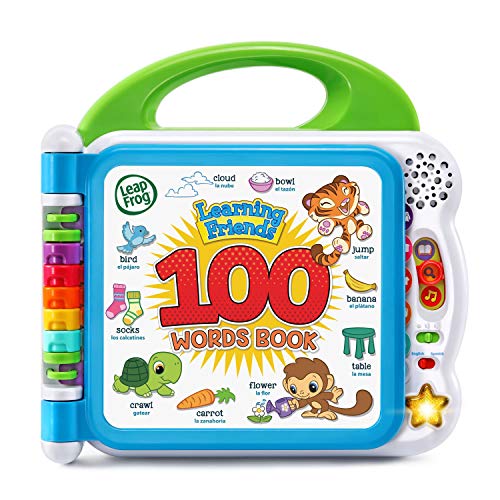
The LeapFrog Learning Friends 100 Words Book offers a compact, interactive way to introduce early vocabulary. It features three learning characters—Turtle, Tiger, and Monkey—who guide toddlers through categories such as pets, animals, food, colors, and activities. When a child touches words on the pages, the book responds with spoken words, sound effects, and fun facts. The light-up star button plays the Learning Friends theme song and a “My Favorite Word” feature, which encourages repeated exposure to new terms. This multisensory approach supports vocabulary building and early literacy in a playful format suitable for two-year-olds and slightly younger children.
Educational value is enhanced by varied word categories that align with common toddler experiences, such as mealtime and outdoor activities. The design encourages tactile exploration and keeps hands active, a key element for motor development at this age. Suitable for independent play or caregiver-guided sessions, this book blends auditory and tactile stimuli to sustain attention and promote word retention without overwhelming the child.
Airbition Talking Flash Cards for Toddlers

The Airbition Talking Flash Cards provide a comprehensive set of 224 words across themes like animals, vehicles, food, fruits, and vegetables. This Montessori-inspired device supports vocabulary growth and cognitive skills through audio-visual cues, making it a versatile tool for toddlers and emerging preschoolers. The cards are designed to deliver content in a standard American accent, with an accessible repeat button and adjustable volume through five levels—allowing caregivers to tailor the experience to noisy environments or sensitive listeners. This modality is particularly helpful for early language learners and children who benefit from auditory reinforcement.
Designed with autism and speech therapy considerations in mind, the talking cards emphasize the association between sounds and images, which can foster communication skills and social interaction. The device is straightforward: turn it on, insert a card, and listen to content. This simplicity helps young children develop listening attention and independent exploration, while the variety of categories supports a broad vocabulary coverage relevant to everyday life.
VTech Drill and Learn Toolbox
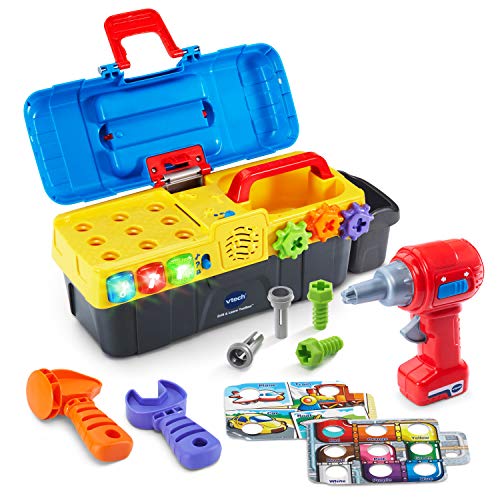
The VTech Drill and Learn Toolbox introduces toddlers to role-play with a kid-friendly fix-it set. Inside, children will find an electronic drill, hammer, wrench, nails, screws, and a fix-it tray with working gears. The drill spins the gears and drives screws into the tray’s holes, promoting fine motor development and hand-eye coordination. Light-up buttons trigger songs and teach about different tools, their names, and sounds. This hands-on experience supports imaginative play and early problem-solving while offering opportunities for social play when shared with a caregiver or sibling.
Durability and kid-safe design are central to this set. The tools and tray are sized for small hands, with simple mechanics that provide immediate feedback, which is important for maintaining a toddler’s interest. The combination of auditory and tactile cues assists memory and concept formation around everyday tasks and basic construction-themed vocabulary.
FOKI Floor Piano Mat for Toddlers

The FOKI Floor Piano Mat is a interactive dance and music mat designed for toddlers aged one to five. It features bright colors, built-in sounds, and lights that respond to steps and taps. With 32 built-in sounds, eight animal sounds, and 16 children’s song melodies, the mat encourages crawling, standing, and dancing. It is designed to develop gross motor skills, rhythm, and auditory discrimination while delivering a safe, engaging experience on the floor. The mat’s soft surface and colorful visuals naturally draw children into movement and early music learning, making it a versatile option for active play sessions inside the home.
Educational benefits extend to color recognition, counting, and animal awareness. By combining music with movement, toddlers get physical exertion and cognitive processing in one activity. Supervising adults can guide the child through simple musical games, such as stepping on certain colors or matching sounds to animals, to reinforce learning goals without turning play into a tally-heavy task.
Montessori Wooden Shape Sorter Puzzle

The Tonberless Montessori wooden shape sorter is a 20-piece puzzle set featuring five colors and five shapes—red, orange, yellow, green, blue; pentagon, square, rectangle, triangle, circle. Crafted from wood with water-based paint, it emphasizes safety, color recognition, and shape differentiation. The set supports sorting, matching, stacking, and pretend play, offering multiple activities in one toy. It is designed for toddlers aged 1–3 and aims to build sensory-perception skills, fine motor control, and early problem-solving ability through tactile exploration and guided play with a caregiver.
Durability and sustainability are focal points of this toy, which uses non-toxic finishes and smooth edges. The modular nature of the pieces makes it suitable for travel and varied play setups—encouraging creativity while reinforcing cognitive development goals like pattern recognition and spatial awareness.
Buying Guide: Key Purchase Considerations For 2-Year-Old Toys
Age-appropriate design: Look for toys labeled for toddlers around two years old, with simple instructions and rich sensory feedback. Avoid small parts that pose choking hazards and ensure materials are durable and safe for mouthing.
Language and cognitive development: Choose options that encourage talking, listening, and word recognition, such as vocabulary cards, interactive books, or musical activities. Multisensory toys (sound, touch, sight) tend to enhance retention and engagement for this age group.
Gross and fine motor skills: Toys should promote both large movements (walking, stepping, dancing) and precise hand movements (pinching, turning gears, manipulating shapes). A blend of activities supports balanced development.
Safety and durability: Verify sturdy construction, rounded edges, and non-toxic finishes. Toys that can withstand rough play and frequent use are ideal for toddlers who test limits with their environment.
Imaginative and role-play potential: Toys that spark pretend play, like tool sets or plush characters, help children explore daily life scenarios, practicing social skills and problem-solving in a playful context.
Caregiver involvement: Some toys benefit from guided play with an adult, which can deepen vocabulary learning and comprehension. Look for items that support cooperative play or simple caregiver-led activities without requiring constant supervision.
Value and versatility: Consider whether a toy can adapt to different activities over time, from quiet reading to active movement and open-ended play. A versatile selection can extend a toy’s usefulness as a child grows.
These selections provide a well-rounded mix of vocabulary-building tools, hands-on manipulatives, and movement-based play that align with developmental milestones for two-year-olds. Each item supports different facets of early learning, from language acquisition to fine motor practice and social interaction, while maintaining safety and age-appropriateness.