Best Toys for Autistic Kids: Sensory, Fidget, and Learning Toys for Calm, Engaged Play
Choosing the right toys for autistic children involves focusing on sensory engagement, communication support, fine motor skills, and calming options. The following selections emphasize calming textures, visual and tactile stimulation, language development, and accessible design. This article reviews five carefully chosen products that support sensory integration, focus, and social-emotional learning in home and classroom settings.
style=”display:block;max-width:900px;”>
Summary Table Of Chosen Products
| Product | Brand | Core Benefit | Link |
|---|---|---|---|
| JOYIN 4-Pack Fidget Tubes | JOYIN | Visual-tactile calming and social-emotional learning | Amazon |
| Scientoy Fidget Toy Set | Scientoy | Comprehensive sensory toolkit for focus and anxiety relief | Amazon |
| LearnToy Busy Board | LearnToy | Fine motor and concentration through Montessori-style activities | Amazon |
| Christmas Stocking Stuffer Sensory Balls | Dr.Kbder | Calming, tactile exploration; classroom reward option | Amazon |
| Airbition Talking Flash Cards | Airbition | Language expansion and autism-friendly play | Amazon |
Joyin Fidget Tubes For Calming Play

JOYIN’s 4-pack fidget tubes offer bright visuals and tactile engagement designed to support sensory processing and social-emotional learning. Each tube provides a calm, hands-on activity that can help children navigate emotions and social interactions during play. The tubes are suitable for home, classroom corners, and therapy settings as calming alternatives during transitions or downtime.
Key features align with sensory integration goals: visual stimulation from vibrant colors, tactile feedback through squeezing and manipulating the tubes, and simple, repetitive actions that support focus. These attributes can aid in self-regulation, making them a practical addition to a calm-down corner or therapy toolkit. This set is appropriate for a range of ages and can be used individually or in small group activities to discuss feelings and social cues.
Scientoy 35-Piece Sensory Fidget Toy Set
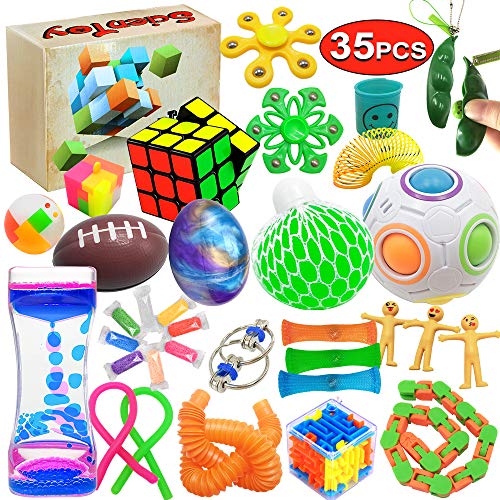
The Scientoy 35-piece set provides a broad spectrum of sensory tools in one box, including liquid timers, mesh and marble fidget toys, and putty-like materials. Made from ABS and designed to meet safety standards, these toys are non-toxic and suitable for children with autism, ADHD, OCD, or anxiety. The diverse options support repetitive play that can help with anxiety reduction, attention focusing, and sensory exploration.
With multiple textures and mechanisms—squeezes, twists, flips, and rolling components—the set supports fine motor skill development and tactile discrimination. The included gift-ready packaging makes it a strong option for rewards in classrooms or therapy sessions, while its variety supports different sensory needs and play preferences.
LearnToy Busy Board For Montessori Style Play
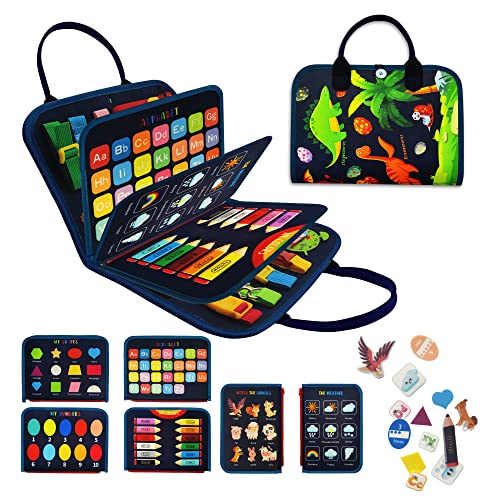
The LearnToy Busy Board embraces Montessori-inspired design to promote concentration and independent play. It features a flexible zipper connection and a range of tactile activities that help develop fine motor skills, hand-eye coordination, and collaborative communication. Its portable, handbag-like form makes it ideal for travel, car rides, and quiet spaces where a child may need to focus or decompress.
Designed for toddlers and young children, the board encourages purposeful exploration with a balance of challenge and accomplishment. Parents and educators can use it to support daily routines, self-regulation, and early problem-solving, all while encouraging a calm and focused play experience.
Dr.Kbder Sensory Balls For Calm And Focus

These sensory balls are designed as a quiet, versatile tool for children with autism and sensory processing needs. The twisting and interlocking ball configurations promote hand-eye coordination, color recognition, and fine motor control. Their durable, non-toxic construction supports everyday use in classrooms, therapy sessions, and home play. The discreet, calming design helps reduce anxiety during transitions while providing a tactile outlet for self-regulation and focus.
Airbition Talking Flash Cards For Toddlers

The Airbition talking flash cards offer a practical tool for language development and autism-focused play. With 224 illustrated cards and a standard American-accent voice, children can learn new words through sound and image associations. The device supports Montessori-inspired exploration, allowing children to practice listening, speaking, and cognitive skills in a guided, repeatable format. A 5-level volume control and a simple on/off mechanism make it accessible for young learners and therapists alike.
Buying Guide: Key Purchase Considerations
- Sensory profiles: Choose toys that align with a child’s sensory preferences—gentle textures for hypersensitive users, or varied textures for seeking-behavior profiles.
- Communication support: Tools that encourage verbal or nonverbal interaction, such as language-focused toys or picture-based devices, can complement speech therapy goals.
- Portability and setup: For home, classroom, or travel use, select toys that are easy to carry, assemble, and sanitize as needed.
- Safety and age range: Look for non-toxic materials, choking-safe designs, and age-appropriate complexity to ensure safe, engaging play.
- Durability and ease of cleaning: Reusable toys should withstand frequent handling and be easy to clean between sessions.
- Multisensory potential: Favor toys that combine sight, touch, sound, and movement to appeal to diverse sensory needs and keep attention.
- Therapeutic alignment: Consider tools that support calming strategies, self-regulation, or therapy goals (social skills, motor planning, language development).
- Classroom usability: For educators, select items that work well in a calm-down corner, sensory shelves, or group reward stations to support classroom management.
Across these five products, the focus is on calm, engaging play that can support social-emotional learning, communication development, and sensory integration. Each item offers distinct tactile experiences and cognitive challenges, giving caregivers and educators options to tailor play to a child’s evolving needs. When selecting toys, consider the child’s current interests, sensory thresholds, and goals for development to maximize engagement and learning outcomes.