Best Walkers for 6 Month Olds: Safe to Use and Great for Development
Choosing a walker for a 6-month-old can support early mobility, encourage standing practice, and stimulate sensory play. This guide highlights five well-regarded options that emphasize stability, engaging activities, and adjustable features to grow with your baby. Each product below includes a brief overview, key features, and why it ranks well for the 6-month stage. Use the buying guide to compare safety, adjustability, and toy engagement to find the best fit for your child and home.
| Product | Brand | Age Range | Key Benefit |
|---|---|---|---|
| Fisher-Price Laugh & Learn Smart Stages Puppy Walker | Fisher-Price | 6+ Months | Three stages of play with educational content |
| Bright Starts JuneBerry Walk-A-Bout | Bright Starts | 6+ Months | Removable floor toy and easy fold for storage |
| Safety 1st Ready, Set, Walk! DX Developmental Walker | Safety 1st | 6+ Months | 12 songs, wide tray, and 3 height positions |
| VTech Sit-to-Stand Learning Walker | VTech | 6+ Months | Removable tray and 5 piano keys for early learning |
| Bright Starts Mickey Mouse 2-in-1 Walker | Bright Starts | 6+ Months | Removable toy station and interactive lights/sounds |
Fisher-Price Laugh & Learn Smart Stages Puppy Walker

The Fisher-Price Laugh & Learn Smart Stages Puppy Walker offers two modes of play: sit-and-play and stand-and-walk, aligning with a 6-month-old’s early mobility milestones. It features 3 Smart Stages levels with more than 75 songs, sounds, and phrases that teach the alphabet, shapes, colors, numbers, and Spanish words. With seven hands-on activities including a light-up piano, nose, roller, spinner, and a flip-page, this walker blends movement with early learning to support cognitive and motor development.
Bright Starts JuneBerry Walk-A-Bout Baby Walker

This walker includes a removable electronic toy with lights, melodies, and sounds, providing engaging sensory feedback as babies practice standing and walking. It is designed for babies 6 months and up, with a high seat back for support and comfort. The frame offers storage-friendly portability, and the toy can be used for floor play or on-the-go exploration, making it versatile for home and travel.
Safety 1st Ready, Set, Walk! DX Developmental Walker

This developmental walker emphasizes first steps with three-position height adjustments and an extra-wide base for stability. It features three toys and a flashing light to provide sensory stimulation and help develop gross motor skills and problem-solving. A large snack-friendly tray accommodates meals or play, while 12 songs add musical engagement during playtime.
VTech Sit-to-Stand Learning Walker
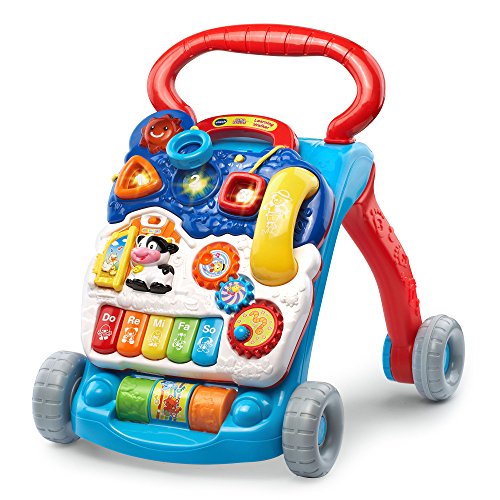
This learner-friendly walker transitions with baby growth: it features a removable tray for seated play and on-the-move exploration on carpet or bare floors. The activity center includes five piano keys that produce musical notes and a pretend telephone handset to promote imaginative play. Additional toys like shape sorters, light-up buttons, and spinning rollers help develop motor skills and coordination.
Bright Starts Mickey Mouse 2-in-1 Walker

This Disney-themed walker brings a beloved character into play with a removable toy station for on-the-go fun. The electronic toy center includes spinning beads, a light-up steering wheel, and a baby-safe mirror. The module can be detached to provide seated entertainment, while ambient lights and melodies keep babies engaged as they master cruising and walking movements.
Buying Guide: Key Purchase Considerations
- Age and growth compatibility: Look for adjustable seat height and a sturdy base to accommodate a fast-growing 6-month-old and early walking attempts.
- Toy engagement and learning features: Prioritize walkers with interactive music, lights, and manipulatives that promote fine motor skills, cognitive development, and sensory exploration.
- Stability and safety: A wide, stable base with non-slip feet reduces tip-overs. Check for required weight limits and smooth, rounded edges.
- Portability and storage: Removable toy stations, foldable frames, and lightweight designs ease storage in small spaces and travel.
- Cleaning and maintenance: Washable fabrics and easily removable trays help keep the walker hygienic for little ones who explore with fingers and mouths.
- Durability and materials: Choose solid frames and reliable brands with good safety track records. Consider warranty options when available.
- Usage environment: If you have stairs or multiple rooms, ensure the walker’s dimensions fit your living space and that it suits carpeted or hard floors.
- Alternatives and progression: Some walkers convert to seated activity centers or standalone toys, which can extend usefulness beyond the walking stage.