Best Wooden Dollhouse for Kids: Imaginative Play That Grows With Them
Wooden dollhouses spark open-ended play, storytelling, and fine motor skills for children. This guide highlights five top wooden dollhouses designed for kids, with varied room counts, furniture sets, and color schemes to fit different play styles. Each option emphasizes durable construction, safe materials, and room-to-room imagination. Below, you’ll find concise product highlights, a quick comparison, and key buying tips to help caregivers choose a timeless toy that supports creative development and family fun.
| Product | Brand | Rooms | Pieces |
|---|---|---|---|
| ROBUD Wooden Dollhouse for Kids Girls | ROBUD | 3 stories | Furniture set included |
| Giant bean Large Wooden Dollhouse | Giant bean | 3 stories | 32 pcs furniture |
| ROBUD Doll House with 6 Rooms | ROBUD | 6 rooms | 29 accessories |
| Tiny Land Wooden Dollhouse for Girls – 6 Rooms | Tiny Land | 6 rooms | 31 pieces |
| Tiny Land 7 Rooms Modern Family Dollhouse | Tiny Land | 7 rooms | 53 pieces |
Note: The following selections focus on a mix of sizes, number of rooms, and furniture counts to suit different play patterns, from high-detail multi-room sets to sturdy, simple designs for younger children.
ROBUD Wooden Dollhouse for Kids Girls

Beautifully designed with a princess theme, this ROBUD dollhouse comes with rich furniture and multiple rooms across three stories. The included wall decor and colorful interiors encourage imaginative play as children rearrange furniture to create new living spaces. This set is especially appealing to kids who enjoy decorating and storytelling, offering a sturdy foundation for creative scenes and daily-life pretend play.
Giant bean Large Wooden Dollhouse

This three-story dream house features 32 pieces of furniture and five rooms, plus a balcony. It blends modern color choices with a warm, inviting interior that kids can customize. The spacious design supports group play and long-term engagement, helping children practice storytelling, role play, and spatial planning as they stage daily routines, celebrations, and family life.
ROBUD Doll House with 6 Rooms

This Nordic-style wooden dollhouse focuses on six distinct rooms and 29 accessories. The furniture is designed for small hands, with smooth surfaces and durable construction. The build promotes creative role-play, as children move through different spaces like living areas, kitchens, and bedrooms, imagining everyday activities and special occasions alike.
Tiny Land Wooden Dollhouse for Girls – 6 Rooms
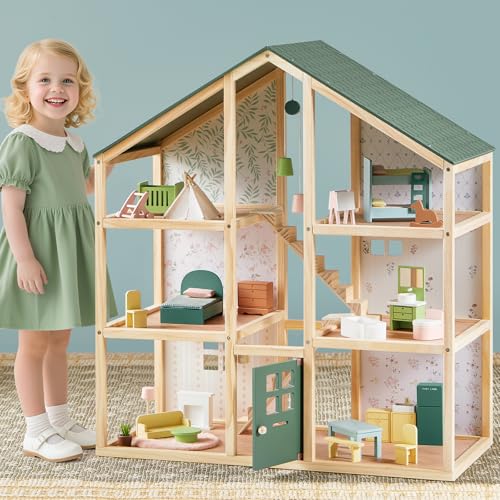
With a forest-inspired design and olive green roof, this Tiny Land dollhouse blends aesthetics with play value. It features six fully functional rooms and 31 pieces of furniture, delivering immersive pretend play that supports imaginative storytelling, fine motor skills, and organizational creativity. The durable wood construction ensures longevity through years of use.
Tiny Land Modern Family Dollhouse

This expansive model offers seven rooms and 53 furniture pieces, designed to inspire elaborate stories and cooperative play. Children can act out everyday family life in a richly furnished, modern setting, building social skills, creativity, and collaborative problem-solving as siblings and friends participate in shared play scenarios.
Buying Guide: Key Purchase Considerations
- Age appropriateness: Look for age suggestions that align with your child’s developmental stage. Larger, simpler sets are better for younger kids, while more rooms and accessories suit older children.
- Durability and materials: Prefer solid wood and smooth finishes for lasting use and safety. Check for non-toxic paints and well-sanded edges to prevent injuries.
- Room count and layout: Decide whether you want a compact, two- to three-story design or a sprawling, multi-room mansion. More rooms encourage complex storytelling but may require more space.
- Furniture quality and scale: Ensure accompanying furniture is sized for small hands and designed for easy grasping and manipulation. Look for openable doors/drawers for interactive play.
- Customization and future play: Some sets include wall decals, wallpapers, and decor that invite personalization, while others emphasize core furniture and essential rooms.
- Assembly and maintenance: Consider assembly time and included instructions. Durable finishes and sturdy hardware reduce wear during frequent handling.
- Room themes and aesthetics: Choose styles that match the child’s interests, whether classic, Nordic, whimsical, or modern, to maximize long-term engagement.
- Educational value: Some sets promote storytelling, role-play, and spatial reasoning, while others focus on decorative exploration and family interaction.
- Storage and organization: Plan for a dedicated space and storage solutions to keep tiny pieces together and reduce loss.