Best Robot Kits for 13 Year Olds: Top STEM Sets for Young Builders
If you’re shopping for a 13-year-old with a curiosity for science, technology, engineering, and math, a hands-on robot kit can be the perfect fit. These kits blend building with basic programming, helping teens develop problem-solving, design thinking, and programming fundamentals while having fun. The following selections emphasize open-ended exploration, durable parts, and clear learning paths suitable for pre-teens and early teens.
| Product | Brand | Key Benefit |
|---|---|---|
| ELEGOO Conqueror Robot Tank Kit | ELEGOO | Arduino-based learning with rich resources and hands-on assembly |
| Henoda Robot Toys | Henoda | Multiple control modes and 468+ pieces for creative building |
| Lucky Doug Solar Power Kit | Lucky Doug | Solar-powered, 12-in-1 builds for STEM foundations |
| Makeblock mBot Robot Kit | Makeblock | Scratch and Arduino learning with easy assembly |
| Cheffun 5-in-1 RC Robot Kit | Cheffun | Five robot models with remote control and durable components |
ELEGOO Conqueror Robot Tank Kit
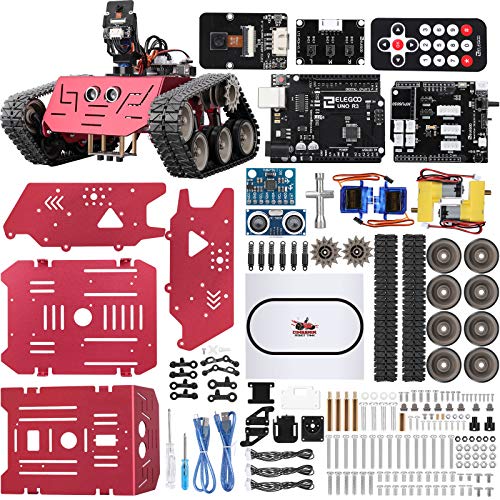
Based on Arduino development, this kit offers open resources and rich learning materials. DIY assembly reinforces concentration and hands-on skills, while graphical programming provides building-block functions and car-style features to stimulate creativity and problem solving. Suitable for curious teens who want tangible results from their experiments.
Henoda Robot Toys
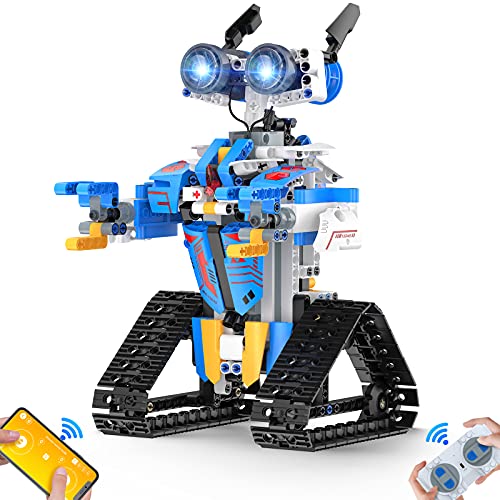
Henoda’s kit includes 468+ pieces and multiple control modes, including app Bluetooth, remote control, and stem programming. It promotes hand-eye coordination and practical skills through varied play modes, such as movement in multiple directions and 360-degree rotation. A versatile option for kids who enjoy transforming robot configurations and exploring different control experiences.
Lucky Doug Solar Power Kit
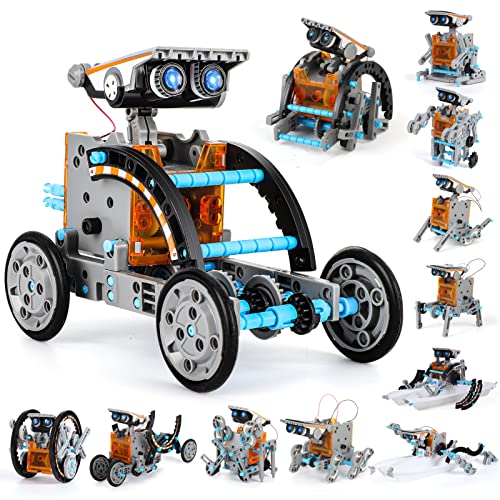
This solar-powered kit enables 12-in-1 builds, helping children establish a foundation in science, technology, engineering, and mathematics without batteries. The solar operation demonstrates renewable energy concepts as the robot crawls, rolls, and floats under sunlight. Clear instructions support guided building, making it suitable for collaborative family projects or classroom-like exploration at home.
Makeblock mBot Robot Kit

The mBot kit targets entry-level coding with Scratch and Arduino compatibility. It includes easy-to-follow building instructions and can be used as a remote-controlled car with line-following and obstacle-avoidance capabilities. Helpful tutorials and apps enable progressive learning, from basic electronics to more advanced programming as skills grow.
Cheffun 5-in-1 RC Robot Kit

Cheffun offers five different robot models: robot, dinosaur, excavator, airplane, and tank. A 2.4GHz remote provides stable signals and straightforward operation—no coding required. With 724 durable ABS pieces, the kit supports long-lasting play and hands-on construction, making it a strong option for multi-model exploration and creative play.
Buying Guide: Key Considerations For 13-Year-Olds
- Learning Path: Consider whether the kit favors guided activities or open-ended exploration. Beginners benefit from clear instructions and then transition to coding or customization as confidence grows.
- Programming Approach: Scratch-based or Arduino-compatible systems help build transferable skills. Teens who enjoy coding may prefer kits with both graphical learning and actual code editing.
- Build Complexity and Time: Some kits assemble quickly and deliver immediate results, while others require longer sessions. Match to the teen’s patience and interest level.
- Durability and Parts: Look for high-quality components, robust hardware, and repeatable parts for ongoing projects. Fewer fragile components reduce frustration during learning curves.
- Expansion Potential: Kits that integrate with apps or support additional sensors and modules provide longer-term value as skills advance.
- Hands-On vs. Screen Time: Solar-powered or mechanical builds emphasize hands-on learning with minimal screen time, while app-based kits introduce programming concepts and digital interfaces.
- Social and Collaborative Value: Multi-model or group-friendly kits support teamwork and shared problem solving, which can be beneficial for classroom or family projects.
Choosing a robot kit for a 13-year-old involves balancing interest areas—coding, mechanics, and autonomous systems—and the caregiver’s goals for skill development. The listed options offer varied pathways, from Arduino-based experimentation to remote-controlled models and solar-powered builds, to support a wide range of learning styles and ambitions.