Best Toys for Toddlers With Speech Delays That Support Language Learning
Parents and caregivers seek engaging toys that support early speech development while keeping toddlers engaged. The following five products are selected for their focus on language-building activities, multi-sensory cues, and ease of use for toddlers age 1–4. Each option leverages interactive features to encourage vocabulary, pronunciation, and conversational play. The list also includes bilingual and multi-language resources to support diverse households. Below is a quick overview of the chosen items to help compare options at a glance.
| Product | |||
|---|---|---|---|
| Speech Therapy Toys & Materials for Toddlers 1-3 & 3-4 | WELL BALANCED | 62 lively sounds and simple daily words to spark early speech | English |
| ZONSTVYS Talking Flash Cards with LCD Tablet | ZONSTVYS | 2-in-1 learning and drawing; 510 words across topics | English |
| Airbition Bilingual Spanish and English Talking Flash Cards | Airbition | Dual-language exposure with clear voice; cognitive content | English & Spanish |
| Startcan Talking Cards for Toddlers | Startcan | 255 cards; 510 sides; easy reader with sounds | English |
| hand2mind Mirror My Sounds Phoneme Set | hand2mind | Phoneme practice and articulatory awareness | English |
Speech Therapy Toys & Materials for Toddlers

The WELL BALANCED set targets early speech development for toddlers from 12 months to 4 years. With 62 lively sounds and simple everyday words, the materials provide a structured pathway for sound association and vocabulary expansion. The platform emphasizes interactive learning that encourages children to imitate and practice word formation, making it suitable for guided speech activities by therapists or caregivers. The flash-card approach supports repetition and retrieval, which can reinforce articulation and listening skills through playful activities.
Key features include: a broad range of sounds aligned to common daily contexts, engaging visuals to support word retention, and a focus on speech-mimicking play. The product is designed to be used in short, frequent sessions, which is often effective for toddlers with speech delays. Caregivers should monitor for fatigue and adjust sessions to the child’s attention span, ensuring a positive, encouraging learning environment.
ZONSTVYS Talking Flash Cards With LCD Tablet

This 2-in-1 Montessori-inspired tool pairs speaking flash cards with an LCD writing tablet to support language and writing skills. With 510 words across 255 double-sided cards, children explore themes such as animals, vehicles, food, and more. The large, glare-free screen and durable construction are designed for repeated use, which is important for consistent speech practice. The combination of auditory cues and visual references helps with vocabulary building, sentence formation, and fine motor coordination through drawing and tracing on the tablet.
Usage tips: rotate topics to match the child’s interests, pair vocabulary with actions (e.g., “jump” with a card of a jumping animal), and gradually introduce phrase-building activities. The product is well-suited for a home learning corner or preschool setting, supporting both spoken language and early literacy foundations.
Peacurh Trilingual Learning Toy Tablet

The Peacurh tablet introduces a tri-language framework—English, Spanish, and French—alongside multiple themes including alphabet, shapes, colors, numbers, and animals. With four play modes (Learning, Quiz, Music, and Pretend Play), it supports receptive and expressive language while promoting memory, listening, and pronunciation skills. The trilingual approach is especially helpful for bilingual households or exposure to multiple languages, contributing to broader phonemic awareness and cognitive flexibility in toddlers.
How to use effectively: alternate languages to avoid confusion, pair activities with real-life references (e.g., naming colors in the target language during play), and encourage repetition in short, fun sessions to reinforce pronunciation and listening comprehension.
Airbition Bilingual Flash Cards

Airbition’s bilingual cards present Spanish and English together, encouraging simultaneous exposure to both languages with a standard American English voice. The tool focuses on core vocabulary alongside cognitive content like numbers, shapes, and animals. The dual-language design can support bilingual households and children who benefit from hearing both languages in context, aiding vocabulary building and basic sentence construction. A clear, natural-sounding voice helps with articulation and listening accuracy while offering flexibility for solo or guided practice.
For best results: design short practice blocks, pair with gestures or actions that reinforce word meaning, and gradually introduce simple sentences to expand expressive language beyond single words.
Startcan Talking Cards for Toddlers

Startcan offers a redesigned card set with 255 cards covering 31 topics, including letters, numbers, colors, animals, and more. The reader pronounces words aloud when cards are inserted, turning passive listening into active speech practice. A dedicated Songs mode provides kid-friendly tunes to support phonemic awareness and rhythm in speech. The compact design and included storage bag support portability and ongoing practice in different settings, from home to travel.
Best practices include pairing cards with actions (like clapping for sounds) to reinforce motor memory and pronunciation. Regular short sessions are more effective than lengthy, infrequent ones for toddlers with speech delays.
hand2mind Mirror My Sounds Phoneme Set
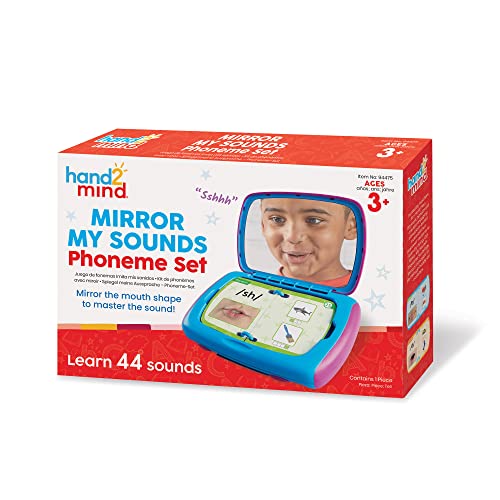
This phoneme-focused kit helps children practice 44 sounds through phonemic awareness activities. The included mirror assists kids in observing mouth and tongue positions, supporting accurate articulation. The phonics-based approach aligns well with early literacy goals while targeting pronunciation and sound discrimination, essential aspects for toddlers with speech delays. The manipulatives and structured activities support guided therapy-style sessions in a playful format, making it useful for both clinical recommendations and parent-led practice at home.
Tip: combine mirror activities with word cards to connect sound production with spoken words, gradually moving from isolated sounds to simple words and short phrases as confidence grows.
Buying Guide: Key Purchase Considerations For Toddlers With Speech Delays
- Language focus and versatility: If your child benefits from bilingual exposure, prioritize products with dual-language options or clear pronunciation in multiple languages. For strictly English-speaking households, focus on clear, consistent English instruction and repeatable prompts.
- Age appropriateness and durability: Look for age ranges that align with your child’s development while choosing sturdy, child-safe materials designed for frequent handling and droppage.
- Multi-sensory engagement: Toys that combine auditory cues, visual stimuli, and hands-on interaction (cards, tablets, mirrors) tend to support better retention and pronunciation practice.
- Guided use vs. independent play: Some tools are therapist-driven while others encourage caregiver-led sessions. Consider your availability and whether you need structured lesson-like features or flexible playtime.
- Progress tracking and adaptability: Toys that offer progressive levels, varied topics, and customizable difficulty help maintain engagement as speech skills improve.
- Safety and age-appropriate content: Ensure that all materials comply with safety standards and do not include small parts that present choking hazards for toddlers.
- Helps with articulation and phonemic awareness: Choose tools that label sounds clearly, provide immediate feedback, and present opportunities to repeat and imitate accurately.
- Maintenance and batteries: Check whether devices require batteries or charging, and consider ease of maintenance and cleaning for toddler use.
Choosing a mix of products—one that fosters vocabulary through flash cards, another that supports bilingual exposure, and a third that emphasizes phoneme awareness—can create a well-rounded home program. Always tailor usage to your child’s attention span, preferences, and the guidance of a speech-language pathologist when available.