Best STEM Toys for an 8-Year-Old Boy: Hands-on Learning
The following selection focuses on engaging, screen-free STEM toys that foster engineering thinking, problem solving, and creativity for eight-year-olds. Each product offers hands-on building experiences, clear instructions, and long-lasting play value. Below is a quick overview, followed by deeper dives into five standout options that align with curiosity, motor skills, and scientific curiosity common at this age.
| Product | Brand | Key Benefit |
|---|---|---|
| Smartivity DIY Robotic Mechanical Hand | Smartivity | Mechanical building that teaches basic robotics |
| Smartivity DIY Pinball Machine | Smartivity | Arcade-style, hands-on mechanism for engineering concepts |
| ThinkFun Gravity Maze | ThinkFun | Logic, planning, and critical thinking with marbles |
| Henoda Robot Toys | Henoda | Advanced STEM building with remote/app controls |
| National Geographic Gross Science Kit | Blue Marble | Gross science experiments to spark curiosity |
Smartivity DIY Robotic Mechanical Hand

The Smartivity mechanical hand kit is a hands-on robotics project designed for ages 8-14. It provides step-by-step instructions to assemble a working hand that demonstrates basic mechanical principles, gears, and linkages. The activity encourages screen-free exploration and cognitive development as children learn through constructing and manipulating the device. The set includes parts and a lifetime supply of replacement pieces to support ongoing play and learning experiences. It targets key STEM skills while offering a rewarding, tangible build for young makers.
Smartivity Pinball Machine for Kids

Smartivity’s pinball kit blends arcade-style fun with engineering. Learners build a full-functioning pinball machine from components, following a guided manual that emphasizes problem solving and creativity. Designed for children ages 8-14, it offers 100% screen-free engagement and a long-lasting parts program. The project reinforces foundational mechanics like levers, springs, and kinetic motion while allowing kids to customize their own miniature arcade setup for extended play and experimentation.
ThinkFun Gravity Maze

ThinkFun Gravity Maze is a logic and planning game that combines marble mazes with spatial reasoning. Players design paths to guide the marble to a target, tackling increasingly challenging towers, grids, and obstacles. The 9-tower setup, marbles, and grid provide a rich, repeatable challenge that builds critical thinking and problem-solving abilities. It’s ideal for solo play or collaborative sessions and serves as a strong classroom or family STEM activity.
Henoda Robot Toys with APP and Remote
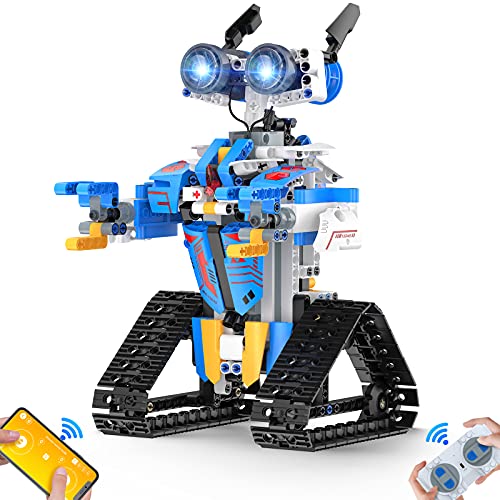
Henoda’s programmable robot kit offers a substantial block-building experience with over 468 pieces and remote or app-based control. This set supports advanced STEM learning through multi-directional movement, 360-degree rotation, and programmable actions. It’s designed for kids aged 8 and up, aligning with developing motor skills and logical thinking. Included are options for Bluetooth app control, 2.4GHz remote control, and multiple modes to accommodate varying skill levels and interest in robotics, making it a versatile long-term project.
National Geographic Gross Science Kit

This National Geographic kit introduces 15 gross science experiments with a bonus 30 additional activities, designed to captivate curious minds. Kids explore biology, chemistry, and geology through hands-on experiments that involve slime, body-inspired demos, and other lively projects. The kid-friendly guide provides clear steps and fascinating science explanations, encouraging safe exploration and in-depth inquiry. The bundle is well-suited for classroom activities or home science time, promoting sustained interest in STEM topics.
Buying Guide: Key Purchase Considerations
- Age suitability and skill progression: Choose kits that align with an eight-year-old’s current abilities while offering room to grow as they gain experience.
- Hands-on engagement vs. screen time: Prioritize activities that require assembly, testing, and iteration to maximize learning outcomes and fine motor development.
- Open-ended vs. structured play: Some sets provide clear steps, while others encourage experimentation and customization — balancing both can sustain interest.
- Durability and parts availability: Look for kits with durable components and access to replacement parts to support long-term play and multiple builds.
- Educational focus: Consider whether the kit emphasizes engineering principles, critical thinking, problem solving, or interdisciplinary science to match broader learning goals.
- Safety and age-appropriate complexity: Ensure parts are non-toxic and appropriate for the child’s age to minimize hazards during construction and play.
- Storage and organization: Kits that include organizers help keep parts tidy and accessible, encouraging ongoing exploration.
- Value across multiple plays: Some sets offer repeatable challenges or modular builds that extend the lifespan of the toy beyond a single project.
In selecting these five options, the emphasis is on durable, educational experiences that engage eight-year-olds with engineering concepts, logical thinking, and creative problem solving. Each product provides a distinct pathway for hands-on STEM learning, whether through robotics, arcade mechanisms, or science experimentation. Parents can rotate between options or combine kits to maintain sustained interest and progressive challenge over time.