Best Toddler Cycle Options for Two-Year-Olds That Grow With Them
Finding the right starter cycle for a two-year-old involves balancing safety, adjustability, and long-term use. This guide highlights five top options that help little riders develop balance, steering, and confidence while staying adaptable as kids grow. Each pick is evaluated for durability, ease of use, and child engagement. Read on to compare features, see how they align with early riding milestones, and explore practical buying considerations.
| Product | Brand | Key Benefit |
|---|---|---|
| SEREED Toddler Balance Bike 2 Year Old (White) | SEREED | Tool-free height adjustability; balance-first design |
| KRIDDO Tricycle for 2-5 Year Olds (Pink) | KRIDDO | Extended rear wheels for rollover prevention |
| SEREED Baby Balance Bike for 1-2 Year Olds (Green) | SEREED | 4-wheel stability; indoor/outdoor use |
| newyoo Toddler Tricycle with Push Handle (Pink) | newyoo | 5 modes; parent-controlled progression |
| KRIDDO Tricycles Age 24 Months to 4 Years (Green) | KRIDDO | Stable wheelbase and safety-focused design |
SEREED Toddler Balance Bike 2 Years Old

The SEREED balance bike is built around a sturdy carbon steel frame that supports up to 110 lbs. It includes a safe footrest pad, rubber grips, and a soft saddle with a starting seat height of 12.6 inches. This design emphasizes stability during early rides and can be used indoors or outdoors in controlled environments.
Adjustability is a key feature: the seat height ranges from 12.6 to 17.1 inches and the handlebar height from 19.6 to 22.5 inches, all without tools thanks to a quick-release mechanism. This allows parents to tailor the bike to their child as they grow and develop balance skills, promoting a smoother transition to pedal bikes later on.
No-pedal operation teaches balance and steering first, a method that can boost confidence and support progression to traditional cycles. In addition, the included personalized plate and stickers offer a fun customization option that helps kids feel ownership over their ride.
KRIDDO Tricycle for 2-5 Year Olds – Pink Toddler Trike

Designed for ages 24 to 48 months, this KRIDDO trike helps young children develop steering and coordination from an early age. The larger wheelbase and extended rear wheels improve stability and reduce tipping while learners gain confidence pedaling and steering. It’s positioned as a gentle path toward independent rides rather than a stationary toy.
The ergonomic seat and non-slip grips enhance comfort during practice sessions, which can help maintain focus during early riding lessons. The tricycle’s simple frame supports active exploration with safety-first considerations to minimize accidents as kids test balance and direction changes.
SEREED Baby Balance Bike for 1-2 Year Olds – 4 Wheels
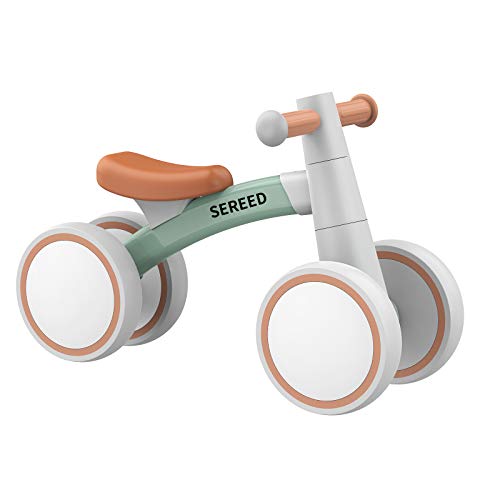
This four-wheel balance bike is designed for toddlers as young as 12 months. Its fully widened closed wheels reduce the risk of pinching or clamping little feet, and the 135-degree turning limit with gravity steering helps prevent tipping. The aluminum alloy frame and non-slip, wear-resistant wheels enable safe riding indoors or outdoors while nurturing early balance and coordination.
With a softly padded seat and grip-friendly handles, this model offers a comfortable introduction to movement for the youngest riders, setting a steady foundation for future cycles and independence on two wheels.
newyoo Toddler Tricycle with Push Handle – Pink

The 5-mode design of this newyoo trike makes it suitable as a push tricycle, balance bike, and traditional tricycle. The steering handlebar rotates up to 135 degrees to help control speed and direction, and the height-adjustable handlebar and seat accommodate growing children. Pedal positions can be adjusted as the child transitions through modes, supporting progressive independence and skill development.
Parents can guide practice with a push handle, while the child benefits from a stable setup that reduces the risk of falls during early training. This model emphasizes adaptability, transport convenience, and multi-stage riding experiences for busy families.
KRIDDO Tricycles Age 24 Month to 4 Years – Green

KRIDDO’s longer-term trike is designed for toddlers from about 24 months to four years. It emphasizes motor skill development with a focus on steering and coordination. The enhanced wheel design creates a stable base, supporting kids as they gain confidence with pedals and navigation. The balance between safety and freedom to explore helps children enjoy independent rides while parents monitor from a comfortable vantage point.
As a durable, practical choice for households seeking a single ride-on option that covers multiple early-stage milestones, this model aligns well with growing riders and evolving play patterns.
newyoo Tricycle for 1-3 Year Olds – Blue
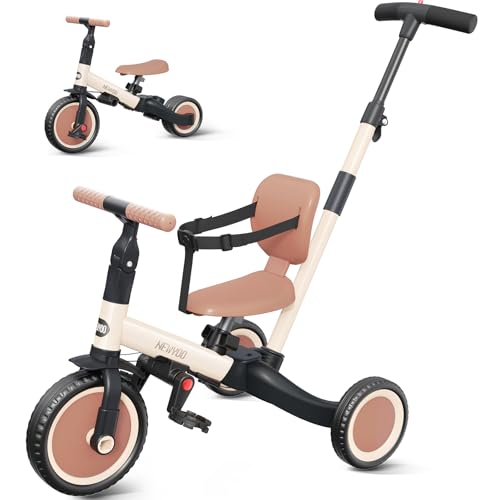
Another versatile option from newyoo offers five modes to match a child’s development. Suitable for one to three-year-olds, this tricycle features a push handle for parental guidance, an adjustable handlebar and seat, and a modular pedal setup for different configurations. This makes it a flexible choice for households needing a single rider toy that can evolve with a child’s skill level and growing physique.
besrey Toddler Tricycle with Bell – Pink
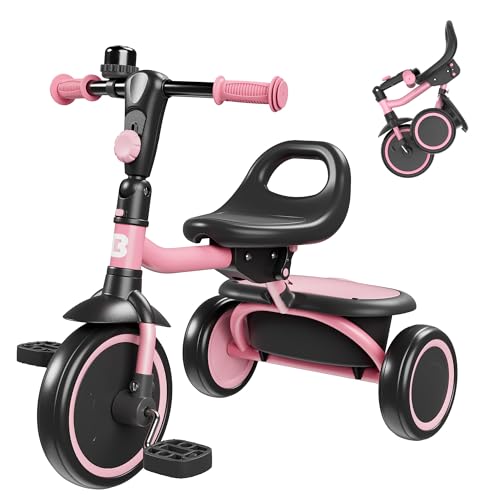
Besrey focuses on beginner riders with a simple, robust design. This tricycle suits toddlers from 18 months to five years, offering a 2-in-1 concept for riding and portable storage. A wide triangular frame and larger rear wheels help prevent tipping, contributing to safer, more confident rides as kids practice steering and pedaling. The included bell adds a playful element that can engage children during trips or playtime sessions.
Buying Guide: Key Purchase Considerations And Comparisons
- Ride type: Decide between a balance bike (pedal-free) to cultivate balance first, or a tricycle to focus on steering and pedaling skill development. Some models combine modes to grow with your child.
- Age and height range: Check recommended age brackets and adjustable features. Look for seats and handlebars that can adapt as your child grows to extend the bike’s usefulness.
- Adjustability and tools: Tool-free height adjustments simplify quick fits for siblings or shifting needs. Ensure clamps and releases are sturdy and easy for adults to operate safely.
- Safety features: Look for wide wheelbases, stable frames, non-slip grips, soft seats, and protective footrests. Consider a design with a limited turning radius to reduce fall risk.
- Materials and durability: Aluminum and stainless steel frames offer durability with light weight. Check weld quality and surface coatings that resist rust and scratches for outdoor use.
- Portability and storage: Foldable or easily disassembled units are advantageous for families navigating apartments or cars. Carrying handles or light frames can help when transporting.
- Maintenance and parts: Simple assemblies and widely available replacement parts reduce long-term maintenance. Consider brands with good warranty support and readily available components.
- Educational value: Favor features that encourage balance, steering, and sensory play, such as adjustable seats, sticker customization, or interactive accessories like bells.
- Safety certifications: While not always listed, seek models with stable designs, padded components, and compliance with child safety standards.
- Budget and longevity: A model with multi-mode functionality may offer better long-term value than a single-purpose bike, especially for households with multiple children.
In summary, the best choice depends on the child’s current abilities and the family’s goals for progression. A balance bike is ideal for early balance training, while a tricycle offers continuous growth through pedals, steering, and speed control. Models with adjustable components and multiple modes provide flexible pathways as kids mature from toddlers into preschoolers.