Best Pop-Up Baby Toys for Cause-and-Effect Learning
Pop-up toys offer engaging, hands-on ways for babies and toddlers to explore cause and effect, fine motor skills, and basic shapes and colors. This guide highlights five top pop-up toys that blend playful animals, music, lights, and simple actions to keep little hands busy and growing. Each pick emphasizes safe design and developmental benefits, helping caregivers choose toys that grow with a child’s curiosity.
| Product | Brand | Age Range |
|---|---|---|
| Battat – Cause – And – Effect Toy – Pop-Up Pals | Battat | 18+ Months |
| Fisher-Price Baby Early Learning Toy – Busy Buddies Pop-Up | Fisher-Price | 12+ Months |
| Interactive Pop Up Animal Toys – Hieoby | Hieoby | 9-18 Months |
| Playskool Poppin’ Pals Pop-Up Activity Toy | Playskool | 9 Months+ |
| B. Toys – Pop-Up Buddies | B. Toys | 18+ Months |
Battat – Cause & Effect Pop-Up Pals
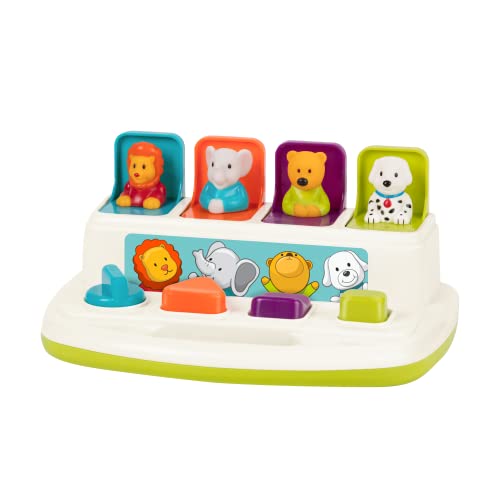
The Battat Pop-Up Pals toy introduces a friendly animal that pops up when a button is pressed. Multiple activations use different actions—turn, press, flip, and slide—so children explore varied interactions. The set supports cause-and-effect understanding, color recognition, and early fine motor skills as little hands experiment with each button.
Fisher-Price Busy Buddies Pop-Up

This early learning toy uses cause-and-effect play with a giraffe, lion, crocodile, and elephant that pop up in response to activations like pressing, flipping, and sliding. Sensory cues—sounds and mechanical responses—support language development and fine motor precision. It offers a clear, repetitive reveal that helps babies anticipate what happens next after each action.
Hieoby Interactive Pop Up Animal Toys

Hieoby’s set features five adorable animals and five buttons in bright colors. Babies trigger actions by pushing, turning, flipping, pressing, or sliding to pop up animals. The toy supports fine motor skill growth, color and shape recognition, and early cause-and-effect thinking. It also includes a learning mode, quiet mode, and a music-and-light mode for varied engagement.
BACCOW Music & Lights Pop-Up Toys

BACCOW’s toy blends music and lights with pop-up action. The design supports color, number, and shape recognition while improving hand-eye coordination through push, press, spin, and close actions. It can operate with or without batteries, offering a versatile play experience that adapts to a child’s developing abilities.
B. Toys Pop-Up Buddies

B. Toys Pop-Up Buddies combine bright visuals with five engaging pop-up activities. Buttons and levers reveal different features—turn the flower to see the sun emerge, press a cloud for a rainbow, and toggle a star to reveal the moon. The toy emphasizes cause-and-effect learning and helps develop fine motor skills through varied actions.
Buying Guide: Key Purchase Considerations
Target age and developmental stage: Choose a toy aligned with your child’s current abilities and motor skills. Look for age ranges that correspond to the child’s notice of cause and effect and fine motor control.
Safety and durability: Ensure rounded edges, non-toxic materials, and sturdy construction. Check battery compartments and the ease of cleaning small parts as babies explore with their mouths.
Modes and sensory features: Some toys offer quiet play, music, and lights. A mix of modes supports varied attention spans and can help with sensory integration and cognitive engagement.
Ease of manipulation: Toys should offer multiple actions (press, flip, turn, slide) to keep little hands engaged and challenged without frustration. Simpler actions are helpful for younger babies, while more complex activations suit toddlers.
Educational value: Look for clear cause-and-effect demonstrations, color and shape recognition, and animal or object themes that spark curiosity. Repetition of actions reinforces learning and memory.
Maintenance and replacement parts: Consider how easy it is to clean the toy and whether batteries are required and accessible. Some models offer battery-free modes for quiet, continuous play.
Portability and storage: Compact designs travel well and fit in small play spaces. Consider whether the toy can be used on a table, floor, or high chair tray for varied play contexts.
Price-to-value balance: While prices are not listed here, compare longevity, replay value, and developmental benefits when assessing overall value. A slightly higher-cost toy with durable quality and multiple modes can offer greater long-term benefit.