Best Step Stool for Kids: Top Picks for Potty Training and More
Choosing a kid-friendly step stool combines safety, durability, and independence. The right stool helps children reach sinks, toilets, and counters with confidence, while sturdy construction minimizes slips and tipping. This guide highlights five top-rated options, each designed to support potty training, kitchen tasks, and everyday activities. Below you’ll find concise product highlights and a buying guide to compare materials, weight limits, and features that matter most for active youngsters.
| Product | Brand | Key Features |
|---|---|---|
| ACSTEP Folding Step Stool 9” | ACSTEP | Heavy-duty plastic, foldable, carry handle, safety corners |
| Dreambaby Step Stool | Dreambaby | Non-slip base, contoured design, lightweight yet sturdy |
| Mallify Wooden Two-Step Stool | Mallify | Birch wood, stability, easy to grip handles |
| Forbena Toddler Step Stool | Forbena | Two-step, no-slip feet, easy to assemble |
| Handy Laundry Folding Step Stool | Handy Laundry | 300 lb capacity, collapsible, versatile use |
The five selections cover a range of materials—from sturdy wood to durable plastic—so families can pick based on budget, cleaning ease, and whether portability is a priority. Each option emphasizes slip resistance, manageable height, and stability to support safe movement for growing kids.
ACSTEP Folding Step Stool 9” Tall
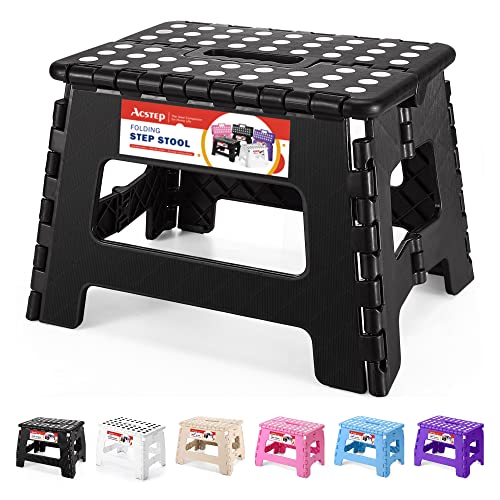
ACSTEP designs this compact, foldable step stool for everyday kid use and easy transport. It is manufactured from tough plastic for long-lasting durability and carries a certified safety profile per EN 14183. A built-in carrying handle simplifies one-handed folding, and the product folds flat for quick storage. Corner protections and a safety stop gap help prevent injuries from accidental bumps or crowding around the stool. This stool suits potting training, bathroom tasks, and light kitchen reach tasks when a little extra height is needed.
Dreambaby Step Stool

Dreambaby’s step stool offers a non-slip base and contoured design intended for potty training and sink access. The stool is built to hold up to a practical weight while remaining lightweight for quick repositioning around the bathroom or kitchen. Eighty-one or more small rubber dots provide traction, helping to prevent movement on tile or slick surfaces. Its compact footprint makes it easy to store when not in use, and its rounded shape reduces sharp edges near toddlers.
Mallify Wooden Step Stool

Crafted from natural birch wood, Mallify’s two-step stool emphasizes stability with a triangle frame and crossbars. A varnished surface and 0.6-inch pedals are designed for longevity and safety. Weighing around 5 pounds, the stool is light enough for kids to handle but sturdy enough to support a broader age range. The design encourages independence by enabling kids to reach sinks and counters without adult assistance in many scenarios, including potty training and kitchen tasks.
Forbena Toddler Step Stool
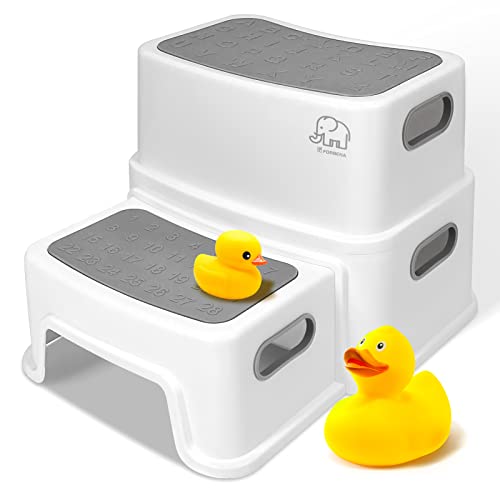
Forbena’s two-step design includes slip-resistant feet and a lightweight plastic structure rated to support up to 200 pounds. The stool is easy to assemble with simple snap-tieces, making it a practical option for potty training and reaching higher surfaces like sinks or kitchen counters. The carrying handle enhances portability, letting children move the stool between rooms as they learn new tasks. The neutral white and grey colorway blends with most bathrooms and kitchens.
Handy Laundry Folding Step Stool

This folding step stool from Handy Laundry concentrates on versatility and space-saving design. With a robust 300 lb weight capacity, it supports adults and kids alike. The stool folds flat for easy storage, making it ideal for small apartments or cluttered homes. Users can flip it open quickly, providing a reliable platform for tasks in the kitchen, bathroom, or bedroom. The wide base and sturdy plastic construction contribute to stable footing for children and caregivers.
Buying Guide: Key Purchase Considerations
Material and Build
Stools come in plastic, wood, or a combination. Plastic models are typically lightweight, easy to clean, and moisture resistant, while wooden stools offer natural durability and a solid feel. For busy households with toddlers, a non-slip surface and rounded corners reduce injury risk. Consider whether a stool will endure daily use, cleaning, and potential water exposure in bathrooms or kitchens.
Safety Features
Look for non-slip feet or grips on both the top surface and the bottom. A contoured or wide base helps prevent tipping. Some stools include safety stops, edge protection, and carrying handles to minimize accidents during folding or transport. EN or ASTM certifications indicate a level of safety testing beyond basic design claims.
Height, Weight Capacity, and Size
Two-step stools commonly provide 6–10 inches of rise per step, with total heights ranging from about 9 to 14 inches. Weight capacity varies from roughly 143 to 300 pounds, so choose a model that accommodates the child and potential caregiver use. For counter or toilet access, ensure the standing platform offers a comfortable reach without overextending legs.
Portability and Storage
Folding stools save space and are easy to store behind doors or under sinks. If you anticipate moving the stool between rooms, prioritize a carrying handle or a compact fold. Wooden stools are bulkier but can be very sturdy, whereas plastic stools usually fold smaller with less footprint.
Maintenance and Cleaning
Plastic stools wipe clean easily, which is beneficial for bathroom or kitchen use. Wooden stools require a wipe-down and occasional varnish or sealant to maintain surface integrity. Consider how often the stool will encounter water, food, or spills when selecting a finish and material.
Usage Scenarios
Match the stool to your routines: potty training safety and reach, brushing teeth at the sink, reaching kitchen counters, or installing a child-friendly workspace. A stool with a strong grip and light weight supports a range of activities, from learning to self-care to helping with household tasks.